How to Choose Dimmable Spotlights for Commercial Spaces
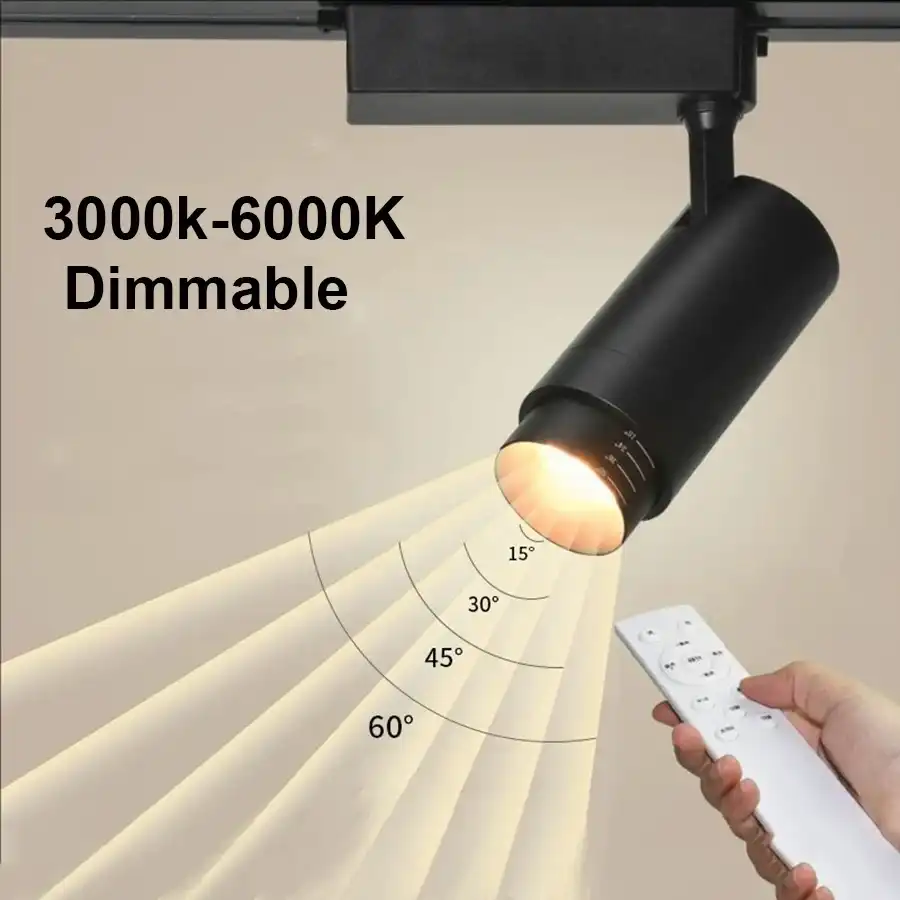
Choosing the right dimmable spotlights for commercial environments requires careful consideration of performance, flexibility, and long-term operational efficiency. A dimmable rail light system offers modular lighting solutions that combine adjustable brightness control with versatile track mounting, allowing businesses to create dynamic lighting environments that enhance productivity while reducing energy costs. These sophisticated systems enable precise light management across diverse commercial settings, from retail showrooms to corporate offices, providing the adaptability modern businesses demand while maintaining professional aesthetics and meeting sustainability goals.
Defining the Need for Dimmable Spotlights in Commercial Spaces
Modern commercial environments face mounting pressure to balance operational efficiency with employee comfort and customer satisfaction. Traditional fixed lighting systems often fall short of meeting these evolving demands, creating spaces that feel either overly bright during certain periods or inadequately illuminated during others. This challenge becomes particularly pronounced in spaces that serve multiple functions throughout the day or accommodate varying occupancy levels.
Understanding Dimmable Rail Light System Benefits
By combining flexible track-mounted fixtures with adjustable brightness settings, dimmable rail light systems mark a substantial improvement over traditional lighting techniques. Facility managers may adjust lighting levels using these systems according to certain activity, the time of day, or the amount of light present. Rail-mounted spotlights are especially useful in dynamic business settings because of their modular design, which makes it simple to reconfigure them as space needs change.
Dimmable lighting technology offers more benefits than only financial savings when it comes to energy conservation. Studies carried out by the United States. According to the Department of Energy, dimming LED lights to 50% brightness may save around 40% on energy use, while dimming them to 25% brightness can save up to 60%. For commercial establishments, these significant power consumption reductions result in lower operating costs and smaller carbon footprints.
Addressing Workplace Productivity and Comfort
Employee performance and wellbeing are greatly impacted by proper lighting regulation. Adjustable lighting solutions may increase worker productivity by up to 15% while lowering eye strain and tiredness, according to studies published by the International Association of Lighting Designers. Task-specific lighting zones may be created using dimmable spotlights, allowing for various activities to take place in the same area without sacrificing overall illumination quality.
The capacity to modify lighting throughout the day to accommodate circadian rhythms is advantageous for commercial areas. Dimming systems that progressively change artificial lighting levels may be used in conjunction with natural light fluctuations to create more pleasant spaces that promote worker happiness and wellness. As companies become more aware of the link between worker performance and lighting quality, this biological factor has grown in significance.
Core Selection Criteria for Commercial Dimmable Rail Light Systems
Selecting appropriate dimmable rail lighting requires systematic evaluation of multiple technical and operational factors. The decision-making process must account for space-specific requirements, regulatory compliance, and long-term maintenance considerations. Understanding these criteria enables procurement professionals to make informed choices that deliver optimal performance and value.
Technical Specifications and Performance Requirements
Manufacturers and product lines of LED spotlights have quite different dimming range capabilities. Smooth dimming from 1% to 100% brightness without flickering or color temperature fluctuations is a characteristic of high-quality systems. From gentle ambient lighting in hospitality settings to dramatic accent lighting in retail settings, this broad dimming range allows for accurate light level changes for a variety of commercial applications.
For shop displays, art galleries, or any application where color accuracy influences business results, color rendering index (CRI) scores over 90 guarantee accurate color representation across all dimming levels. Dimmable systems' color temperature stability keeps the illumination quality constant over the dimming range by preventing the warm color changes that happen with conventional incandescent dimming.
Compatibility and Integration Considerations
In order to maximize operational efficiency, smart building management systems are becoming more and more important in modern commercial complexes. Whether via DMX512, DALI (Digital Addressable Lighting Interface), or wireless protocols like WiFi or Zigbee, dimmable rail light systems must work in unison with current automation platforms. Advanced features like occupancy-based dimming, daylight harvesting, and planned lighting programs are made possible by this interoperability, which guarantees centralized control capabilities.
Rail-mounted systems may be expanded or reconfigured in the future without requiring significant infrastructure upgrades because to their scalability. Businesses may modify their lighting as requirements change thanks to high-quality track systems that support a variety of spotlight sizes and kinds. This flexibility is especially useful for workplace spaces that are periodically reorganized or retail settings that change displays on a regular basis.
Installation and Design Considerations for Optimal Performance
Successful implementation of dimmable rail lighting systems depends heavily on proper planning, professional installation, and thoughtful design integration. The complexity of modern dimming technology requires careful attention to electrical compatibility, control system programming, and fixture placement to achieve optimal results.
Professional Installation Requirements
Complex electronic components used in dimming systems must be installed correctly in order to operate dependably. Since mismatched dimming controls might result in flickering, a shorter lifetime, or even system failure, suitable dimmer switches must meet the unique needs of LED fixtures. Expert installers can guarantee correct phase compatibility between controllers and fixtures and are aware of the subtleties of various dimming protocols.
When putting many dimmable lighting on shared circuits, electrical load calculations become crucial. Because LED spotlights vary electrically from conventional lighting technologies, installers must take power factor and possible harmonic distortion into mind. In addition to preventing electrical problems, proper circuit design guarantees uniform dimming operation for all linked fixtures.
Creating Effective Lighting Zones
By enabling autonomous management of various space regions, strategic zone development optimizes the advantages of dimmable rail systems. Separate zones for workstations, circulation areas, and meeting spaces—each with illumination levels tailored to their main purposes—are advantageous in open office settings. Zoning may be used in retail settings to draw attention to item displays while keeping ambient lighting in customer circulation sections pleasant.
To ensure consistent lighting free of hotspots and dark areas, track systems and individual spotlight placement need careful consideration of beam angles, spacing ratios, and mounting heights. These factors may be modeled by expert lighting design software, guaranteeing ideal light distribution prior to installation. In addition to preventing hot spots that arise from an excessive fixture density, proper spacing also avoids the scalloping effects that happen when fixtures are positioned too far apart.
Comparing Dimmable Rail Light Systems to Other Lighting Options
Understanding how dimmable rail systems compare to alternative lighting solutions helps commercial buyers make informed decisions based on their specific requirements and constraints. Each lighting approach offers distinct advantages and limitations that must be weighed against project goals and budget considerations.
Traditional Track Lighting vs. Modern Rail Systems
Halogen or compact fluorescent spotlights, which have poor dimming capabilities and use more energy, are often used in conventional track lighting systems. More accurate dimming control, extended service life, and increased energy economy are all benefits of modern LED rail systems. The total cost of ownership greatly benefits LED technology because of its lower energy consumption and maintenance needs, even though the initial expenditures of LED systems may be higher than those of older options.
Comfort and HVAC expenses are impacted by the variations in heat production across technologies. In contrast to LED alternatives, which create less heat and may even lower HVAC needs, halogen spotlights emit a lot of heat, which may raise ambient temperatures and increase cooling loads. In retail settings where temperature control is necessary for heat-sensitive items, this thermal consideration becomes more crucial.
Smart Lighting Integration Capabilities
Modern dimmable rail systems may be integrated with artificial intelligence and Internet of Things platforms to provide automatic optimization based on energy cost structures, daylight availability, and occupancy patterns. Predictive maintenance warnings, automatic energy reporting, and adaptive lighting schedules that react to real consumption patterns rather than preset durations are all made possible by these clever features. Connected lighting systems' data collecting capabilities provide important insights into patterns of energy use and space utilization. Facilities managers may use this information to find unused spaces, improve lighting schedules, and make data-driven choices on energy management and space allocation.
Procurement Guide and Vendor Selection for B2B Clients
Understanding vendor capabilities, market dynamics, and contractual factors is essential for navigating the commercial lighting procurement process and ensuring successful project results. The intricacy of contemporary lighting systems necessitates thorough vendor assessment and precise specification creation to prevent expensive errors or poor performance.
Evaluating Supplier Capabilities
Professional qualifications, thorough technical documentation, and a track record of successful commercial installations are ways that trustworthy vendors verify their knowledge. Seek for suppliers that uphold UL listings, Energy Star certifications, and adherence to pertinent industry standards, such as IES testing procedures. These certifications show compliance with performance and safety requirements that safeguard end users and installers alike. During the installation and operation stages, providers' technical support skills become essential.
Reputable suppliers provide comprehensive installation instructions, dimming control compatibility matrices, and quick-response technical support teams that can handle system integration issues. Long-term system dependability and peak performance are guaranteed by the training programs offered to facility maintenance employees.
Warranty and Service Considerations
Commercial-grade dimmable rail systems must to come with extensive warranty coverage that goes beyond simple component replacement to incorporate technical assistance and performance assurances. LED drivers and fixtures from top manufacturers usually come with five-year warranties, however some provide longer protection for commercial applications that use them often.
Long-term investment value is safeguarded by future compatibility support and the availability of replacement parts. Budget forecasting and long-term planning are made possible by suppliers that keep spare parts in stock and provide transparent product roadmaps. For big installations or facilities with many sites where component uniformity provides operational benefits, this support system is especially crucial.

Company Introduction and Our Dimmable Rail Light System Solutions
USKYLED stands at the forefront of commercial lighting innovation, delivering advanced dimmable rail light systems that transform commercial environments through precision engineering and cutting-edge LED technology. Our commitment to excellence drives the development of sophisticated lighting solutions that address the complex challenges facing modern commercial facilities, from energy efficiency requirements to dynamic space utilization needs.
Advanced Technology Integration
High-performance LED components with CRI values over 90 and flicker-free operation across the whole dimming range are used in our dimmable rail light systems. Even in demanding commercial applications, these systems' sophisticated heat management features guarantee reliable performance and a long service life. Our rail systems' modular design allows for easy expansion and reconfiguration in response to changing business requirements.
The technical team at USKYLED specializes in OEM and ODM solutions that are tailored to specific project needs. Our technological talents allow customized solutions that go beyond typical product offers, whether we're constructing integrated control systems for big office installations or unique beam angles for shop display lighting. Strict quality control procedures are maintained in our production operations to guarantee reliable performance even on high-volume orders.
Comprehensive Support Services
We are aware that high-quality items alone are not enough for lighting projects to succeed. From the creation of the original specifications to installation and continuing maintenance, USKYLED offers complete technical assistance. To guarantee the best possible system design and execution, our team of lighting experts collaborates closely with contractors, designers, and facility managers. In North America, Europe, and other overseas markets, USKYLED's distribution network's worldwide reach guarantees dependable product availability and technical assistance. Our dedication to client satisfaction is shown by our prompt communication, effective order
Conclusion
The selection of dimmable rail light systems for commercial applications requires careful consideration of technical specifications, operational requirements, and long-term value propositions. Modern LED dimming technology offers unprecedented control capabilities and energy efficiency benefits that support both immediate performance goals and sustainable operation practices. Success depends on thorough evaluation of space requirements, proper system integration, and partnership with reliable suppliers who provide comprehensive support throughout the project lifecycle. The investment in quality dimmable lighting systems delivers measurable returns through reduced energy consumption, enhanced workplace productivity, and improved customer experiences that contribute directly to business success.
FAQ
What factors determine the suitability of dimmable rail light systems for different commercial settings?
The appropriateness of dimmable rail lighting depends on ceiling height, space flexibility requirements, and lighting control needs. Retail environments benefit from the adjustability for merchandise highlighting, while offices require uniform task lighting with dimming capabilities for energy management. The track system's flexibility accommodates frequent layout changes common in dynamic commercial spaces.
How does smart control integration affect installation costs for dimmable lighting systems?
Smart control integration typically increases initial installation costs by 15-25% due to additional control hardware and programming requirements. However, these systems enable advanced energy management features that can reduce operational costs by 30-40% over time. The payback period usually ranges from 2-4 years depending on usage patterns and energy rates.
What maintenance practices help prolong the life of commercial dimmable rail systems?
Regular cleaning of fixtures and tracks prevents dust accumulation that can affect heat dissipation and light output. Annual inspection of dimming controls and connections ensures reliable operation and identifies potential issues before they cause system failures. Professional maintenance programs can extend system life beyond manufacturer warranties while maintaining optimal performance levels.
Partner with USKYLED for Your Commercial Lighting Solutions
Transform your commercial space with USKYLED's advanced dimmable rail light system solutions designed for demanding commercial applications. Our experienced team provides comprehensive support from initial design consultation through installation and ongoing maintenance, ensuring your lighting investment delivers optimal performance and value. As a trusted dimmable rail light system manufacturer, we offer competitive pricing for bulk orders, custom engineering capabilities, and reliable technical support that meets the demanding requirements of commercial projects. Contact our lighting experts at sales@uskyled.com to discuss your specific requirements and discover how our innovative lighting solutions can enhance your facility's performance while reducing operational costs.
References
1. U.S. Department of Energy. "Commercial Lighting Energy Efficiency and Dimming Control Systems." Office of Energy Efficiency and Renewable Energy, 2023.
2. International Association of Lighting Designers. "Impact of Adjustable Lighting on Workplace Productivity: A Comprehensive Study." IALD Research Publication, 2022.
3. Illuminating Engineering Society. "Recommended Practice for Retail Lighting: RP-2-21." IES Standards Committee, 2021.
4. Building Research Establishment. "Energy Performance of LED Dimming Systems in Commercial Applications." BRE Environmental Assessment Method, 2023.
5. American Society of Heating, Refrigerating and Air-Conditioning Engineers. "Advanced Lighting Controls and Building Automation Integration." ASHRAE Technical Guidelines, 2022.
6. Commercial Buildings Energy Consumption Survey. "Lighting Energy Use Trends in U.S. Commercial Buildings." Energy Information Administration, 2022.


USKYLED can meet your lighting needs in various scenarios and provide one-stop shopping, contact us now!
Why You Should Choose USKYLED?
![What is Dimmable Track Lighting for Museum: Best Guide [2025]](/icms/upload/0d08cc601e7611f0b542b3ca0c0f4a83/pic/knowledgemanager-knowledgepic/e7879f32605f11f081911f363b8c1ed0/Directory/20250717 dimmable track lighting -1(1)_1752739217941.webp)