How Long Should Emergency Lights Stay On?
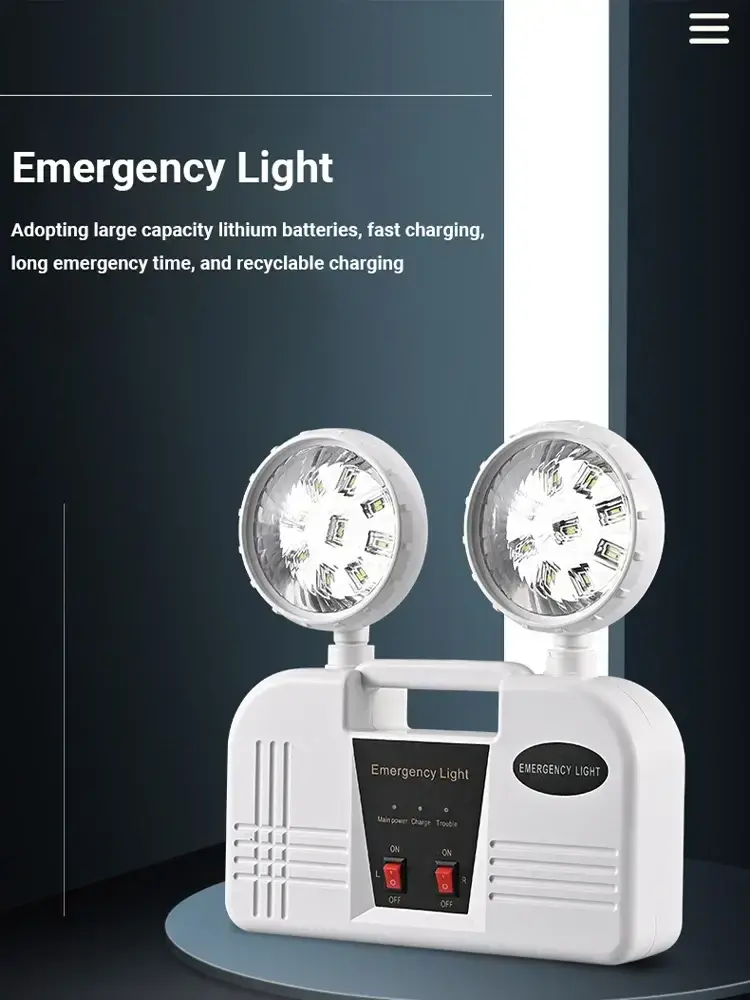
Emergency lighting is like a lifesaver when the power goes out; it helps people get to safety when it gets dark quickly. Most building codes and safety rules, like NFPA 101 and IEC laws, say that battery backup lights need to work for at least 90 minutes. There needs to be more time, up to three hours, in some high-risk places like workplaces, hospitals, and transportation hubs. These rules about downtime will help you make sure that your facility follows the rules and keeps people safe when every second counts.
Understanding Emergency Light Runtime Requirements
When choosing emergency lights for business projects, they must meet all safety standards. The National Fire Protection Association (NFPA) says that battery backup lights must work for at least 90 minutes when the power goes out. As a general rule, this much time gives people enough time to leave the building.
International Standards Governing Runtime
Rules that affect buying choices are different in different places. The International Electrotechnical Commission (IEC) rules say that it must be used for at least 90 minutes, which is a lot like what the NFPA says. Similar limits are set for the minimum amount of light along exit ways in the European standard EN 1838. These rules make sure that all markets are the same. This makes it simpler to plan projects that will take place in more than one country.
Factors Influencing Actual Runtime Performance
There are a number of things that can make emergency lights not last as long as it should. Batteries have a direct relationship with how long they last, but the temperature of the area has a big impact on how fast they discharge. When batteries are cold, they store up to 30% less power. When they are hot, they lose even more power. How well the light source works is also important. Normal sources of power use more power than LED technology, so the batteries can last longer. Batteries don't break down when they're needed most when they get regular care, like being checked on every six months.
Extended Runtime Applications
There are places that need to be used for longer than 90 minutes. For tough evacuations to be possible, healthcare facilities that house people who can't walk need three hours of backup. High-rise buildings that are more than 75 feet tall may need more runtime so that people can leave more slowly. Long-lasting lighting is also good for factories that use dangerous materials because it lets workers do the right things to shut down before they leave. Finding out how dangerous your building is will help you decide when to do something.
Battery Backup Lights – Types and How They Impact Runtime
There are a lot of different kinds of emergency lights, and each one has its own life. To better match product specs with business goals and budgets, buying teams need to know about these differences.
LED Versus Traditional Light Sources
These days, battery backup lights using LED technology are most popular because they use less power. With the same battery size, a 10-watt LED unit lights up the same amount of space as a 40-watt bulb, but it lasts 75% longer. Because it works better, the battery that needs to be put is smaller. This makes it easier to make changes to buildings that are already there. Fluorescent systems are still a good choice for big jobs, even though they need more maintenance because the lamps need to be changed more often and they only run for a shorter time.
Battery Chemistry Comparisons
The type of battery you choose has a big effect on how much it costs to own in total. Lead-acid batteries are good for big purchases that you want to make but don't have a lot of money to spend right away. But they need to be changed every three to five years and regularly checked to make sure they are in good shape. When you first buy them, lithium-ion choices cost 40 to 60 percent more, but they last 8 to 12 years with little damage. NiMH batteries are in the middle because they don't cost too much and last between 6 and 8 years. These trade-offs in speed need to be carefully weighed against how long the job takes and how easy it is to check up on it.
Another thing that helps with the choice process is knowing how the chemicals in different kinds of batteries respond to changes in their surroundings. When it gets below 50°F, lead-acid batteries lose some of their power. This can be a problem for places outside or in buildings that aren't warm. It is possible for lithium-ion batteries to keep their power even when the temperature changes, from -4°F to 140°F. Even though it costs more, lithium-ion is better for places with harsh weather because it lasts longer. In the long run, this will save money on repairs.
Rechargeable Systems and Maintenance Cycles
The batteries in modern emergency lights last longer because they are charged in smart ways. Trickle-charge technology keeps things ready and stops damage from happening when they are charged too much. Smart units always check the battery's health and send alerts when the capacity drops below what's considered safe. This proactive way of service cuts down on mistakes that happen in real life. When batteries are empty, they take different amounts of time to charge again. Modern lithium-ion batteries can fully charge in 12 hours, while lead-acid batteries need 24 hours to fully charge. This is very important for places where the power goes out a lot for short periods of time.
Key Considerations When Choosing Emergency Lights for Your Business
When picking out the right emergency lights, you need to think about a lot of technical and useful things. This decision will have an effect on both compliance and long-term work success.
Runtime Versus Brightness Trade-offs
Most of the time, bigger batteries mean bigger structures that weigh more and take up more space. But the efficiency of LED technology gets around this problem. Modern units can run for 90 minutes on small battery packs and still give off enough light. From floor level, building codes say that exit routes must have at least one foot-candle of light. You can put battery backup lights farther apart if you choose ones that give off more light, which lowers the total number of units you need and the cost of installation. Photometric analysis must be used in the planning step to make sure that this optimization follows the rules without being too picky.
Advanced Features Enhancing Functionality
These days, an emergency light isn't just a light. By adding motion sensors, lights will only turn on when someone is inside. This will save battery power when people are leaving empty rooms. When you don't need full power, being dimmable lets you change how bright it is. This keeps it running longer. With remote monitoring, building managers can use centralized screens to make sure that systems are ready on multiple sites. This saves them time and effort because they don't have to check each one separately. Business that run a lot of houses or big sites will find these tools useful.
Durability and Environmental Ratings
How much security is needed is based on the installation setting. Weather protection isn't as important in an office, but lights in parking areas need to be IP65-rated so that dust and water can't get in. In places where chemicals are used, housings that don't rust must be made of stainless steel or have a special covering. When landscape lighting professionals use lamps, they should make sure that the lenses are UV-stabilized so that the light doesn't turn yellow and lose its power. Temperature settings make sure that the unit will always work. Standard units can work in temperatures ranging from 32°F to 104°F, but people who need to do their jobs in tough environments need units with higher temperature ranges. By making sure that environmental scores are accurate for the real world, you can avoid problems with warranties and early failures.
Comparison of Battery Backup Lights and Alternatives for Emergency Use
Side by side are battery backup lights and other emergency choices. Other emergency lighting systems might also work, depending on where they are put in and what their main purposes are.
Solar-Powered Emergency Lighting
Solar emergency lights don't need to be plugged in, so they can be used in places that are far away or don't have stable power. Batteries inside the system are charged by solar screens during the day. This means that the system can run without having to pay for energy. On the outside, these systems can be used to light roads, parking places, and the border. Solar screens, on the other hand, only work when they are constantly in the sun. Places that get a lot of clouds or don't get much sunlight in the winter may not get enough charging. This issue can be solved with hybrid systems that use both solar power and backup power from the grid. These systems also save money on energy bills.
LED Efficiency Advantages
When looking at different types of light sources, LED emergency lights are always the best in a quantity of ways. Fluorescent lamps only last 10,000 hours, but LEDs can last up to 50,000 hours. In other words, LEDs need a lot less maintenance and new parts. It's great for buildings with high ceilings that need pricey lifts to get to because it lasts so long. LED units also come on quickly and are fully bright, while fluorescent systems need time to warm up. In cases where light is needed right away, this is very important. The solid-state design is stronger than tubes, so it doesn't break as easily when it's being used or put together.
Cost Analysis Over Product Lifecycle
It doesn't cost as much to buy emergency lights as it does to buy them all at once. A full study looks at things like installation work, energy use while the system is not in use, battery replacement times, lamp changes, and testing work. Over the course of 10 years, LED systems with lithium-ion batteries are 40% cheaper to own than fluorescent fixtures with lead-acid batteries, even though they cost more at first. In places where wages are high, like North America and Europe, this estimate is more accurate. When purchasing in bulk, procurement managers should ask suppliers for lifecycle cost estimates and make sure that the comparisons take into account things like area labor rates and energy prices.
Procurement Guide: How to Buy and Source the Best Emergency Lights?
Good buying techniques keep project costs as low as possible while also making sure the quality of the products. This part talks about things that B2B buyers should think about when they buy.
Evaluating Supplier Qualifications
Picking a vendor is more than just picking a price. When a business has been around for a while and has a lot of different licenses, it means they are dedicated to meeting high standards. Look for a UL 924 listing for use in North America. For sales in Europe, look for a CE mark. And for RoHS compliance, that means the item doesn't have any harmful materials in it. It's easier to make sure that the design is uniform when the same seller sells both battery backup lights and regular architectural lights. By looking at the names of suppliers who have worked on projects like this before, you can be sure that they can meet technical and shipping dates.
Bulk Purchasing Strategies
You can save a lot of money by making big deals, but you need to plan ahead. Using the same types of fasteners at different steps of a project lets you buy more at once and save money while keeping the design the same. Some sellers let you put an order in and the goods will stay with them until it is placed. Big projects don't need as much money up front. It's easier to keep track of cash flow when you negotiate payment terms like 30–60 day net terms or bills based on milestones. Because value engineering starts early in the planning process, it can help find ways to save money without lowering performance.
Certification and Compliance Verification
More than just what the seller says needs to be checked on goods before they can be approved. Request real test reports from reputable labs such as Intertek or Underwriters Laboratories. Companies sometimes sell copies of their products that aren't certified along with certified ones, so make sure that the certification scope fits your model numbers. If you are working on a city project or a government building, you may have to follow the Buy American Act. Check out the shop and see where the parts come from. Shipping delays can be avoided by making sure that the moving of batteries meets the rules set out in UN3480. This is especially important when buying things from other countries.
Installation and After-Sales Support
The job goes more smoothly if you get fitting help from the company that sells you lights. Many businesses have groups of trained workers who know how to set up their goods. This speeds up the process of setting up and fixes any issues that may arise with the promise. You can be sure that your long-term investments are safe because the lights and batteries are guaranteed for at least 5 years. Make sure it's clear from the guarantee terms how often maintenance needs to be done. Some companies won't fix problems that haven't been tried regularly. Projects don't get held up, which can cost a lot of money, when there is expert help available during startup troubleshooting. This is very important when working with providers from other countries and time zones.
Conclusion
That being said, setting runtimes for emergency lights is a good way to follow the rules and make sure that people are safe. Usually, they need to be used for 90 minutes, but for high-risk sites, this time can be increased. The best performance, longevity, and ease of maintenance are offered by battery backup lights that use lithium-ion chemistry and LED technology. When buying something, it's important to think about how long it will run, how stable it is in different environments, how well it works with licenses, and how much it will cost you in total over its whole life.
Each project's emergency lighting needs are met by working with companies who offer full technical help and the freedom to make changes. When buildings get more complicated, it's important to pick emergency lights that you can depend on to keep people safe and keep things running when the power goes out.
FAQ
What is the minimum runtime required for emergency lights?
When the power goes out, most building codes say that stores have to stay open for 90 minutes. Because hospitals and high-rise buildings are high-risk, you may need up to three hours more time. They are set by NFPA 101 and IEC rules to make sure there is enough time to get out in case of an emergency.
Which battery type offers the best value for commercial applications?
Lead-acid batteries only last 3 to 5 years, while lithium-ion batteries last 8 to 12 years. This means that lithium-ion batteries are more cost-effective in the long run. They're easy to take care of and work well in a bigger range of temperatures. The cost of substitutes goes down over time, and they work better in tough conditions.
Can emergency lights function in outdoor installations?
Yes, as long as it's clearly outlined and has the right environmental grades. IP65 fixtures don't let water or dust in, so they can be used in enclosed outdoor spaces. At least IP66 protection is needed for installations that are left open to the outside world. Solar-powered devices can work in rural outdoor places without being connected to the power grid, but they may not always work because of bad weather.
How often should emergency lighting systems be tested?
Functional tests are done once a month to make sure the device works, and full-discharge tests are done once a year to make sure the battery's runtime meets standards. Many places need written records of tests to make sure they follow the rules. Self-diagnostic features in new units make maintenance easier by checking the system's health all the time and letting site managers know about any problems that might be happening.
Partner With USKYLED for Reliable Emergency Lighting Solutions
In a very specific way, USKYLED makes high-performance battery backup lights for business and industry use. Our emergency lighting systems are made with cutting-edge LED technology that is approved by UL, CE, and RoHS, among others. There is a 90+ CRI on these devices, and they can run for longer. Our flexible OEM/ODM solutions let you buy in bulk, and we'll make sure that your projects get environmentally friendly lights that meet all the rules. We also offer quick expert support. Email us at sales@uskyled.com to talk about your emergency lighting needs and learn how our knowledge can help builders and suppliers around the world.
References
1. National Fire Protection Association. NFPA 101: Life Safety Code. 2021 Edition. Quincy, MA: NFPA Publications.
2. International Electrotechnical Commission. IEC 60598-2-22: Luminaires for Emergency Lighting. Geneva: IEC Standards.
3. European Committee for Standardization. EN 1838: Lighting Applications - Emergency Lighting. Brussels: CEN Publications, 2019.
4. Illuminating Engineering Society. IES RP-29: Lighting for Hospitals and Healthcare Facilities. New York: IES Technical Reports, 2020.
5. Underwriters Laboratories. UL 924 Standard for Emergency Lighting and Power Equipment. Northbrook, IL: UL Standards, 2018.
6. U.S. Department of Energy. LED Lighting for Emergency Applications: Performance and Best Practices. Washington, DC: DOE Building Technologies Office, 2022.

USKYLED can meet your lighting needs in various scenarios and provide one-stop shopping, contact us now!
Why You Should Choose USKYLED?
![What is Dimmable Track Lighting for Museum: Best Guide [2025]](/icms/upload/0d08cc601e7611f0b542b3ca0c0f4a83/pic/knowledgemanager-knowledgepic/e7879f32605f11f081911f363b8c1ed0/Directory/20250717 dimmable track lighting -1(1)_1752739217941.webp)