Step Light Manufacturer: How to Choose the Best
To pick the right step light manufacturer, you need to carefully consider their professional skills, quality standards, and the possibility of working together for a long time. There is a growing need for energy-efficient lighting solutions in both business and household settings. However, procurement workers have to find manufacturers who can offer reliable, certified goods with consistent quality. As part of the decision process, experts in production, certification compliance, customization options, and after-sales support are all looked at to make sure that your lighting projects go as smoothly as possible.
Understanding Step Light Manufacturers: An Industry Overview
The business that makes step lights uses a wide range of production methods and technology advances that affect the quality of the products and where they are placed in the market. Contemporary makers work with complex supply chains and use cutting-edge LED technology and precise engineering to make lighting options for homes, businesses, and buildings.
Core Manufacturing Functions and Processes
The main tasks of manufacturing are putting LEDs in, making housings, and using quality control systems. Automatic manufacturing lines are common in factories. These lines carefully connect LED parts with driver circuits and machine the metal housings to exact specifications. Quality assurance methods make sure that each unit meets the standards for photometric accuracy and longevity by testing it thoroughly.
Finding high-quality aluminum metals and polycarbonate parts is the first step in the manufacturing process. These are the building blocks for long-lasting fixings. Advanced CNC cutting makes sure that the body is the right size, and specialized coating treatments protect against rust and add a nice look. To keep parts intact and get the best long-term performance, putting together LED modules needs to be done in a clean room.
Types of Manufacturers in the Market
There are several different types of manufacturers in the business, and each one serves a different group of customers and market niche. Custom makers focus on one-of-a-kind solutions, giving architects the freedom to choose from a variety of designs and combinations. Most of the time, these providers keep their production volumes low and offer highly customized goods with longer wait times.
Bulk production companies focus on standard product lines that can be made in large quantities and have prices that are competitive. Because they have streamlined their operations, they can quickly fill orders and keep the quality high across large amounts. This makes them perfect partners for big business projects and distribution networks.
Eco-friendly companies focus on using sustainable materials and making designs that use less energy. They also use reusable parts and try to have as little of an impact on the environment as possible during the whole production process. To attract customers who care about the environment, these businesses often try to get green certifications and use carbon-neutral production methods.
Material Innovation and Design Trends
Today's step lights focus on safety features by using better beam spread and glare control technologies. More and more, manufacturers are using die-cast aluminum construction because it better gets rid of heat, and new lens technologies make the light spread even and improve eye comfort. More and more people want smart integration features, such as dimming settings and sensor support.
New types of materials include marine-grade aluminum alloys for use near the coast and special polymer mixtures for making lightweight systems. Concerns about safety in public places are addressed by anti-slip finishes and building that can't be damaged by vandals. Modular designs also make upkeep and replacing parts easier.
Criteria for Choosing the Best Step Light Manufacturer
To choose the best step light manufacturer, you need to carefully look at a number of performance markers and operating skills. For procurement to go well, the skills of the maker must be matched with the needs of the project and the company's long-term goals.
Defining Your Procurement Requirements
To choose the right maker, you must first make clear specifications that include technical needs, expected number, and delivery dates. Pricing and minimum order amounts are directly affected by volume, while the need for tailoring determines the best type of maker and their abilities. Lead time needs to be in line with project plans and methods for managing inventory.
Different types of projects and markets have different certification needs. For example, UL listing is needed for projects in North America, while CE marking is needed for sites in Europe. DLC certification makes sure that energy rebates are valid, and IP grades show how much wetness and dust protection is needed for outdoor uses.
Quality Assessment Metrics
Evaluating the quality of a product includes looking at how well it works with light, how long it lasts, and how safe it is electrically. Consistency in lumen output, color temperature accuracy, and beam angle accuracy are all signs of good quality control in production. Long-term dependability standards are shown by testing the housing's soundness, which includes thermal cycles and vibration resistance.
Energy efficiency measures, such as efficacy scores and power factor standards, have a direct effect on both environmental compliance and operational costs. Manufacturers of good products give full photometric reports and heat analysis data to back up promises about performance and guarantee coverage.
Manufacturer Reputation Analysis
To judge someone's standing in their field, you have to look at things like project portfolios, customer reviews, and professional qualifications. Manufacturers who have been around for a while usually keep long lists of references that show successful setups in a wide range of markets and uses. Professionals who belong to lighting industry groups and trade associations show that they are dedicated to upholding industry standards and learning new things.
An evaluation of financial stability guards against problems in the supply chain and makes sure that long-term help is available. Credit ratings, how long a business has been around, and its growth rate can tell you a lot about a manufacturer's resiliency and relationship possibilities.
Comparing and Evaluating Top Step Light Manufacturers in 2026
There are a lot of competitive choices in the manufacturing world right now, and each one has different strengths when it comes to price, quality, and service delivery. Knowing about these differences helps you make smart decisions and choose the best source.
Price Structure Analysis for Bulk Buyers
Different makers have very different pricing plans. The total cost of ownership is affected by things like volume discounts, payment terms, and shipping arrangements. Leading makers have tiered pricing systems that reward customers who commit to bigger orders while keeping prices low for customers who only want to place smaller orders. Different cash flow needs can be met by payment choices that are flexible, such as longer terms and progress bills.
Step light manufacturers that emphasize high-quality production often charge premium prices, but their products deliver superior performance, durability, and longer warranties. For applications with tighter budgets, more affordable step light manufacturers provide options that may sacrifice certain features or service levels while still meeting essential quality standards, offering a balance between cost and reliable performance.
Export Capabilities and Logistics
For international sourcing to work, producers need to have a track record of exporting and good transportation networks. Shipping options, the correctness of customs paperwork, and the dependability of delivery all have a direct effect on project costs and timelines. Shipping costs are often reflected in minimum order quantities, with container-load amounts offering the best unit prices.
Good packaging keeps items safe while they're being shipped and lowers the number of times they get damaged and the costs of replacing them. Exporters with a lot of experience offer complete paperwork packages that make it easier to clear customs and follow the rules in many different countries.
B2B Client Review Insights
Verified customer reviews shows how well a company does in terms of quality, delivery, and service. Positive reviews always talk about how helpful the technical support is, how accurate the shipping plans are, and how the product meets or exceeds expectations. A lot of the time, negative feedback is about problems with communication, inconsistent quality, or not enough help after the sale.
Professional buyers put a lot of weight on how reliable a maker is during times of high demand and emergencies. Consistent success in tough situations shows managerial strength and partnership worth that goes beyond simple transaction relationships.
The Step Light Manufacturer Procurement Process Explained
For procurement to go well, you need to know what the maker can do and set up clear lines of contact throughout the whole process. Planning and writing things down correctly ensure the best results and reduce the chance of problems.
Sample Request and Evaluation Procedures
Sample requests are usually the first step in the buying process. These allow for hands-on review and performance verification of the product. Good makers give out samples that are representative of the whole and come with full specs and photometric data. Visual inspection, photometric tests, and making sure the sample works with other systems should all be part of the review process.
Technical specs, installation directions, and warranty terms are some of the things that must be documented. Complete sample packages show that the maker is skilled and pays attention to detail, while information that is missing or wrong could mean that quality control isn't working well.
Negotiating Custom Specifications
When making a custom product, it's important to be clear about what you want and set reasonable deadlines. Manufacturers who are good at engineering can make changes to designs while still meeting performance standards and following the rules. Before committing to full production, prototype development stages let specifications be fine-tuned and performance improved.
The costs of tailoring depend on how complicated the changes are and how many are made. Simple changes, like special finishing or mounting setups, usually don't cost much more, but big changes to the electrical or optical systems need big development costs.
Lead Time Management for Bulk Orders
When there are a lot of sales and short delivery dates, it's important to coordinate the production schedule. Manufacturers with a lot of experience give accurate lead time predictions that take into account current production loads and the supply of materials. For pressing needs, you may be able to place a rush order at a higher cost.
Some ways to handle your inventory, like using blanket orders and planned releases, can help you find a good mix between supply flexibility and carrying costs. Progressive shipments work with construction plans and reduce the amount of storage space needed on-site.
Future Trends and Innovations in Step Light Manufacturing
The step light manufacturer industry is constantly evolving due to emerging technologies and changing consumer preferences. Staying informed about these trends enables buyers to select products that meet future demands, ensuring that installations remain modern, efficient, and aligned with market expectations.
IoT Integration and Smart Controls
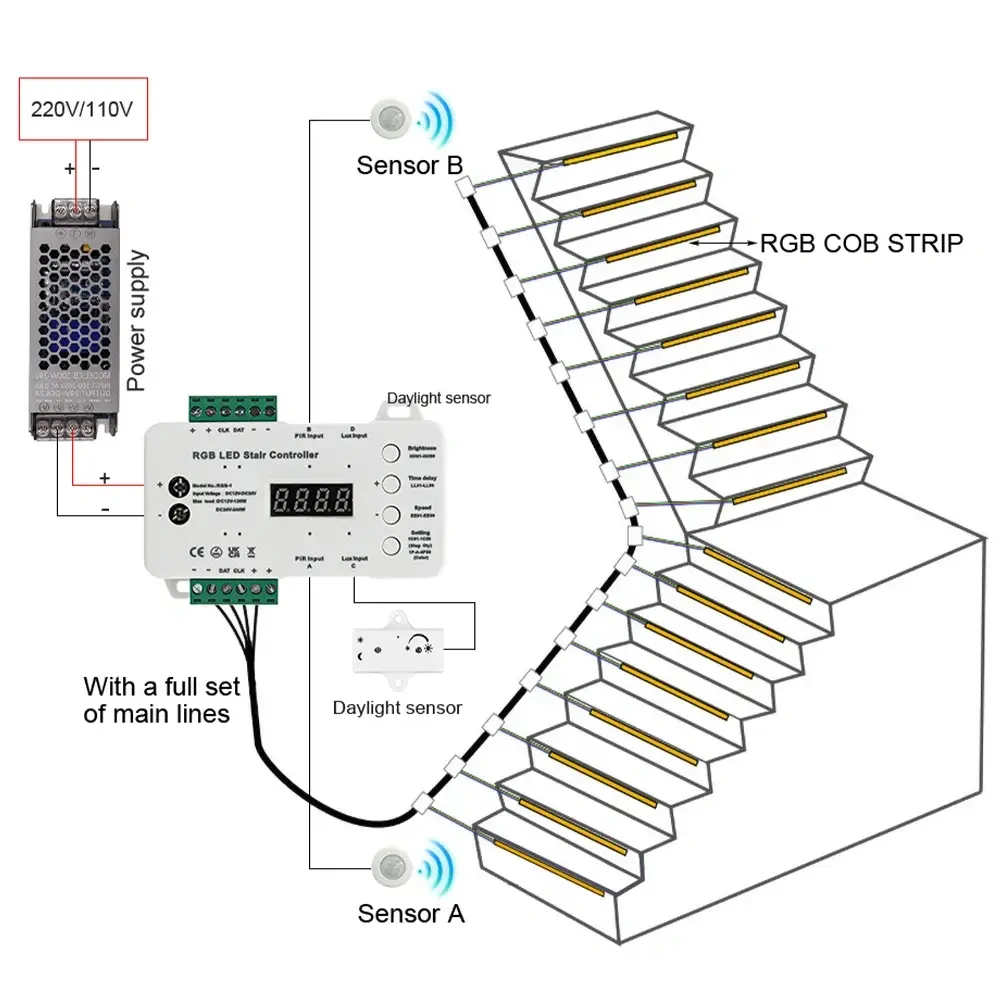
Integration of smart lights is a big area of growth, and companies are making goods that work with building automation systems and wireless control networks. IoT-enabled step lights can be monitored from afar, track energy use, and do preventative repair before they break. This lowers costs and makes the system more reliable.
There are different ways to connect, such as wired methods for mission-critical tasks and wireless standards like Zigbee and WiFi. Integrating sensors allows for occupancy recognition and sun harvesting, which improves both energy use and the user experience even more.
Sustainable Manufacturing Practices
Manufacturers use safe products and production methods because they care about the environment. Buyers who care about the environment like products that are made from recycled metal, come in biodegradable wrapping, and can be shipped without releasing any carbon. Life cycle analysis data helps figure out how much damage is done to the earth and backs up green building standards.
Manufacturers' use of green energy and energy-efficient manufacturing methods show that they care about sustainability in more ways than just designing sustainable products. Most of the time, these actions lead to lower costs that help customers by making prices more competitive.
Global Sourcing Evolution
After recent world problems, supply chain robustness has become more important. When it comes to stability and risk management, manufacturers with a wide range of suppliers and flexible production options are better. Building up regional production capacity cuts down on shipping costs and delivery times, and it also helps the local economy grow.
Quality standardization across various production sites makes sure that products work the same way no matter where they are made. This feature gives supply security and the ability to grow as customer interactions do.
Conclusion
Selecting the optimal step light manufacturer requires balancing multiple factors including quality, cost, delivery capability, and long-term partnership potential. Success depends on thorough evaluation of manufacturer capabilities against specific project requirements and organizational objectives. The investment in proper supplier selection pays dividends through reliable product performance, competitive pricing, and responsive support throughout the partnership lifecycle.
FAQ
What certifications should I look for in a reliable step light manufacturer?
Essential certifications include UL listing for safety compliance, DLC qualification for energy efficiency, and IP ratings for environmental protection. CE marking is required for European markets, while RoHS compliance ensures environmental responsibility. These certifications demonstrate manufacturer commitment to quality and regulatory adherence.
How can I verify product quality when placing bulk orders?
Quality verification involves requesting representative samples, reviewing photometric test reports, and conducting factory audits when possible. Third-party testing laboratories can provide independent verification of performance claims. Manufacturer quality management certifications like ISO 9001 indicate systematic quality control processes.
What are typical lead times and MOQ requirements for customized orders?
Standard customizations typically require 4-6 weeks for production, while significant modifications may extend to 8-12 weeks. Minimum order quantities often range from 100-500 units depending on customization complexity. Prototype development may add 2-4 weeks to initial delivery schedules.
Partner with USKYLED for Premium Step Lighting Solutions
USKYLED stands as your trusted step light manufacturer partner, delivering cutting-edge LED technology and customized lighting solutions for commercial and architectural applications. Our advanced manufacturing capabilities, comprehensive certifications, and proven track record with distributors across North America and Europe ensure reliable supply chain partnerships. Contact our team at sales@uskyled.com to discuss your specific requirements and experience our commitment to quality, innovation, and exceptional customer service.
References
1. Illuminating Engineering Society. "LED Lighting Systems Performance Guidelines for Commercial Applications." IES Standards Committee, 2024.
2. Department of Energy. "Solid-State Lighting Manufacturing Roadmap and Best Practices Report." Office of Energy Efficiency and Renewable Energy, 2024.
3. International Association of Lighting Designers. "Architectural Step Lighting: Design Guidelines and Safety Standards." IALD Professional Development Series, 2023.
4. Building Research Institute. "Energy Efficient Lighting Systems in Commercial Buildings: Performance Analysis and Cost Benefits." BRI Technical Publication, 2024.
5. Global Lighting Association. "LED Manufacturing Quality Standards and Testing Protocols for Commercial Applications." GLA Industry Guidelines, 2023.
6. American National Standards Institute. "Safety Requirements for LED Lighting Products in Commercial and Residential Applications." ANSI/UL Standards Development, 2024.

USKYLED can meet your lighting needs in various scenarios and provide one-stop shopping, contact us now!
Why You Should Choose USKYLED?
![What is Dimmable Track Lighting for Museum: Best Guide [2025]](/icms/upload/0d08cc601e7611f0b542b3ca0c0f4a83/pic/knowledgemanager-knowledgepic/e7879f32605f11f081911f363b8c1ed0/Directory/20250717 dimmable track lighting -1(1)_1752739217941.webp)