Recessed vs Surface Step Lights: Key Differences
Whether to use hidden or surface step lights depends on the needs of the project, the ease of placement, and the desired look. recessed step lights are built deep into the structure of stairs, giving them a low-profile, classy look that is great for keeping things simple. Surface-mounted options connect directly to the steps, which lets them be put in place faster without having to change the structure. Both options improve safety by lighting up paths and lowering the risk of accidents, but they are very different in how they are installed, how long they last, and how they can be integrated into the design. This makes it very important for procurement professionals handling business projects to make well-informed choices.
Understanding Step Lights: General Overview
Step lighting is no longer just a practical matter; it has become an important part of business design and planning for operating safety. By strategically lighting up stairways, walkways, and intermediate areas, these lights make them much safer for people to walk on and reinforce brand identity.
What Are Recessed Step Lights?
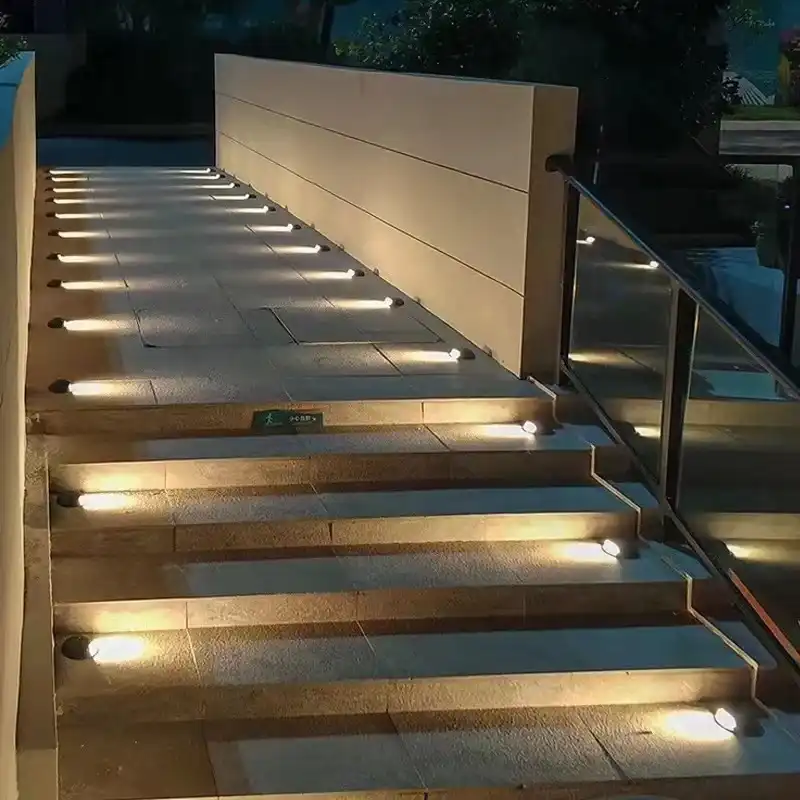
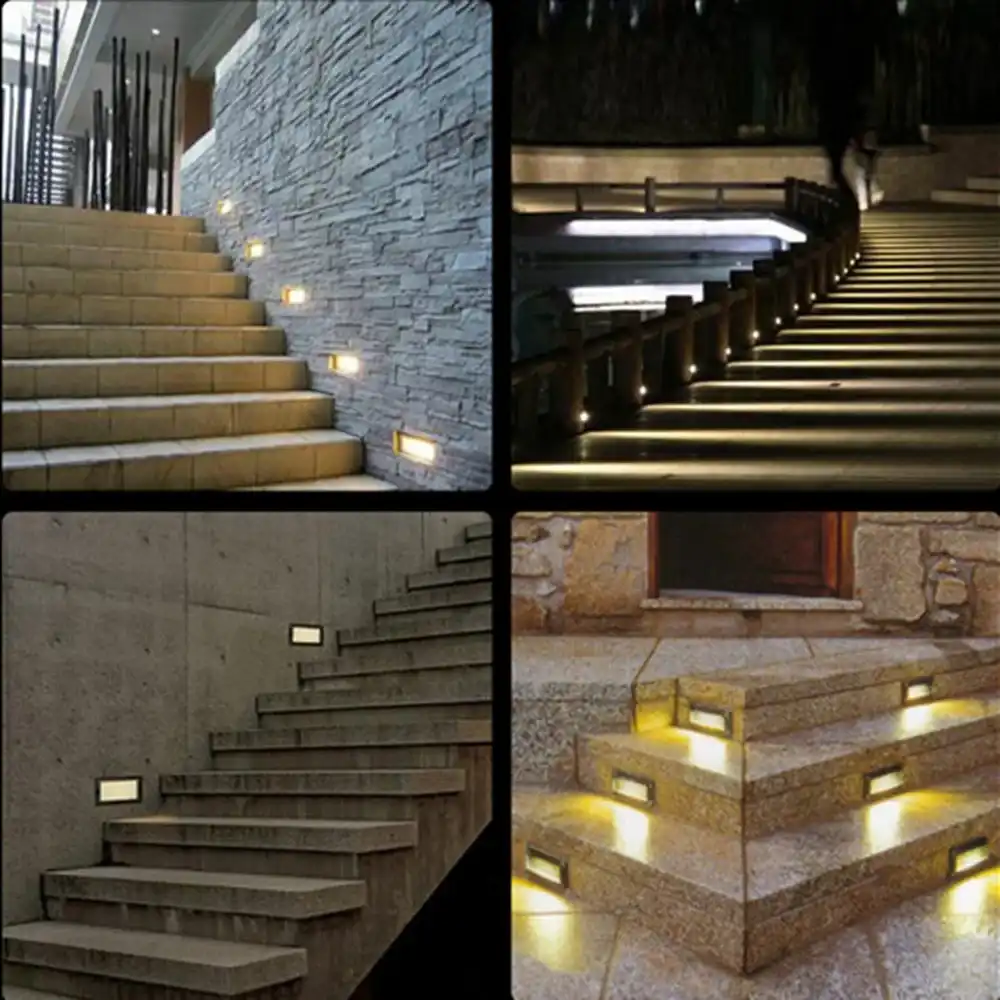
When you place recessed step lights directly into stair risers, treads, or nearby walls, they look like they've always been there. Only the light hole can be seen because the bulb body is behind the surface plane. For this integrated method to work, the cutouts must be exact and have enough depth space during the building or remodeling process. Engineers like this method because it is hard to damage and doesn't stick out too much. This makes it especially useful in places with a lot of foot traffic, like shopping malls, hotels, and office buildings. Because the installation is so complicated, electrical workers and building teams have to work together very carefully. However, the clean look that is achieved is worth the work for projects that value design sophistication.
What Are Surface Step Lights?
Surface-mounted step lights are attached to the outside of the stairs with clip systems or sticky mounts. Installation skips the need for structural cuts, which greatly shortens the time it takes to install. Facility managers often choose this method when they need to make changes to current buildings that would be too invasive. Even though uncovered fixture profiles are a bit more noticeable than recessed ones, they are better for upkeep because techs can get to parts without damaging the materials around them. These flats are good for short-term uses, rental properties, or situations where keeping the original building is important. Modern surface designs use low-profile housings that don't get in the way of the view and still make things easy to get to.
Core Benefits of Step Lighting Systems
The biggest benefit of step lighting is that it makes things safer. Studies from the National Safety Council show that well-lit stairways in businesses cut the number of falls by up to 60%. Improvements to visibility help users find changes in slope, especially when there isn't much light or when they need to evacuate quickly. Energy economy through LED technology lowers running costs. For example, modern LED step lights use 75% less power than halogen versions and last 50,000 hours or more. Longevity means fewer upkeep cycles and lower labor costs, which are important for site managers who are in charge of many properties. Design flexibility lets builders use lighting as a reflection of the building rather than an afterthought. This helps brands stand out in shopping and leisure settings.
Comparison of Recessed vs Surface Step Lights: Dimensional Analysis Approach
When making a purchase choice, it's important to look at technical specs, installation instructions, and long-term performance traits with a clear head. This method for comparison takes into account the real issues that sourcing managers and project engineers have when they look at lighting options.
Installation Complexity and Structural Requirements
For recessed installs, preparation needs to start early. For electrical rough-ins to work, they need to be coordinated with concrete pours or brick work so that junction boxes are inserted in the right places. Most recessed units need 50–75 mm of space behind the mounting surfaces, which can get in the way of structural support or current utilities. Core drilling through stone or concrete may be needed for renovation jobs, which adds to the cost of work and takes longer to finish.
But once they are put in place, these pieces become fixed parts of the architecture that can't be changed or damaged by impact. Surface systems don't need to go through structures at all. Mounting clamps can be attached with building adhesives or mechanical screws, which lets them be used the same day in many situations. Surface-mounted conduits or wire tubes are often used for electrical connections. This makes fixing and replacing parts easier. The trade-off is that homes in high-traffic areas are a little more likely to get damaged, but strong building materials make this less of a problem.
Durability and Environmental Resilience
Protection scores show how well something works in certain settings. IP65 grades are the bare minimum for outdoor use because they keep dust out and resist water jets. Premium recessed models have IP67 ratings, which means they can withstand short submersion. This is important for installs near pools or places that will be pressure washed. Surface units usually have protection levels between IP54 and IP65, which is good for outdoor areas that are covered but might not be enough for areas that are exposed to direct weather. The choice of material has a big effect on how long something lasts.
Marine-grade metal housings don't rust in coastal areas, and UV-stabilized polycarbonate lenses keep glasses from turning yellow from being in the sun all day. Impact resistance is important in industrial areas where moving tools can cause accidents. Fixtures with an IK08 rating can handle 5-joule hits, which is the same as a 1.7 kg mass being dropped from 300 mm, so they are good for warehouses. Certifications give buyers peace of mind. For example, UL listing proves that electrical safety standards are met, Energy Star title proves that efficiency standards are met, and DLC approval often makes it possible to get utility rebates.
Energy Performance and Customization Options
Modern step lighting is mostly made of LED technology because it is so efficient. Most LED recessed step lights use only 1 to 3 watts of power and give off 50 to 150 lumens, which is enough to light the way without creating too much light pollution. At business power rates, the annual energy costs per fixture are often less than $2. This means that large-scale deployments are financially possible. Designers can match lighting plans to colors that are flexible in terms of temperature. Warm white (2700–3000K) makes places like hotels and restaurants feel more welcoming, while neutral white (4000K) works well in business settings.
In factory settings, cool white (5000K+) makes things easier to see. Additional energy saves come from being able to dim lights and incorporate motion sensors. Occupancy-based rules cut delay by 40–60% during times of low traffic, which saves even more money. Customization goes beyond optical features; housing finishes, lens treatments, and form factors can all be changed to meet different visual needs. We've worked with design teams that needed custom color temperatures and specific mounting setups. This shows that our manufacturing is flexible, which is something that distributors value when they're trying to serve niche market groups.
Procurement Considerations: Rational Choice Approach
To get around in the global supply world, you have to find a balance between quality control, price, and the dependability of your suppliers. Before placing big orders, B2B buyers should learn about how the market works and what the seller can do.
Evaluating Supplier Capabilities
Well-known brands like Philips and Osram charge high prices but offer a lot of detailed information, guarantee support, and a steady supply of their products. Mid-tier suppliers usually offer reasonable prices and good quality, making them a good choice for projects on a budget where name recognition isn't as important as useful performance. Procurement managers should check possible partners' licensing portfolios, output capacity, and lead time promises when they are reviewing them. If you buy in bulk, you can usually get tiered prices, which means that when you buy 500, 1000, or 5000 units, you usually get 10–25% off. Budget surprises during project completion can be avoided by knowing the minimum order amounts and tooling costs for custom specs.
Application-Specific Selection Criteria
Lower IP ratings are fine for business areas that are inside, but fire-rated housings may be needed to follow the rules. Recessed installations work well in fixed buildings where better looks are worth the extra money spent on installation. Surface solutions work great for renovations or temporary settings where installations need to be able to be taken down and put back up again. For outdoor and garden uses, you need materials that don't rust or break down in bad weather. When used in harsh environments, recessed lights protect interior parts better, extending the time between service calls. Integrated photocells allow operation from dusk to dawn without integrating with a building control system, making stand-alone installs easier.
USKYLED's Value Proposition for Step Lighting Projects
Our manufacturing method solves common problems with buying things by using quality systems that have been checked and quick expert help. USKYLED recessed step lights are certified by both UL and CE, which means they meet safety standards in both North America and Europe. Every month, more than 10,000 units can be ordered, and normal specifications have wait times of three to four weeks. Customization services include changing the size of the housing, the color temperature of the LEDs, and the way the drivers are set up.
This is very important for OEM partners and wholesalers who serve specific market groups. We have strict quality control procedures in place, such as photometric tests and IP rating checking on all items before they are shipped. Installation guides, wiring plans, and maintenance schedules are all included in technical reference packages in more than one language, which makes field deployment easier. This all-around support system helps workers finish projects on time and with as few callbacks and guarantee claims as possible.
Installation and Safety: Step-by-Step Guide
Installing a system correctly has a direct effect on how well it works, how long it lasts, and how safe it is. This useful advice gives tech teams the information they need to make deployments go smoothly.
Pre-Installation Planning and Tool Requirements
First, make sure that the electrical load estimates take into account the total wattage of all the fixtures plus 20% as a safety cushion. Make sure the voltage of the power source fits the specifications of the fixture. Putting together 12V and 24V systems will fail right away. Required tools include:
• wire strippers
• voltage testers
• drill with masonry bits (for recessed installations)
• waterproof sealant
• mounting hardware
• personal protective equipment
Before starting work, check your local electrical rules to see what they say about how to protect circuits and how to use tubing.
Recessed Installation Procedure
Place the fixtures according to the building plans, making sure that the distances between them are always the same. Usually, 600–900 mm between fixtures gives enough light coverage. Use hole saws or core drills of the right size to make mounting holes, and use monitoring tools to look for hidden utilities. It's important to clean out holes completely because dust builds up and makes it harder for heat to escape. When running electrical wires through conduit systems, make sure to leave 150 mm service loops at each outlet site.
Follow the polarity marks when connecting lights; using the wrong polarity may damage the LED drivers. Use the fixing clips or bolts that come with the housings to keep them in place and make sure they are flush with the finished surfaces. For protection, put silicone sealant around the edges and wait 24 hours for it to cure before turning on the wires. Before moving on to the next placement point, test each device on its own.
Surface Mount Installation Procedure
Using level tools to keep the horizontal line, set bolts at the same heights, which are usually 100 to 150 mm above the tread nosings. Mark where the fixing holes will go and drill pilot holes that are the right size for the base. Anchors for concrete are not the same as screws for wood; choose fixings that are right for the structure. Securely attach the fixing frames and make sure they are stable before hanging the fixture bodies.
Run the supply wire through knockout holes or cable glands, making sure there is enough strain relief to keep the conductors from wearing out. Make electrical connections inside junction boxes by following the code's rules for the size of the wire nuts and the consistency of the ground. As required by the IP rating, seal any holes where cables can enter with plugs or sealer. Put on the cover plates and make sure everything works before calling the job done.
Safety Protocols and Maintenance Planning
Before starting any electrical work, turn off the power at the breaker boxes and use testing tools to make sure there is no voltage. Don't just assume it's safe. Follow the lockout-tagout rules when more than one worker is working at the same time. Set up upkeep plans that include eye checks every three months, photometric tests once a year, and lens cleaning as needed. Fixtures that don't work should be replaced right away because incomplete lighting schemes lower safety benefits. Write down the times of installation and the specs of the parts so that you can keep track of your warranty and plan future purchases.
Design Ideas and Application Scenarios
Strategic lighting design turns useful needs into settings that people want to experience. These application ideas show how adding step lighting makes business areas better.
Commercial Hospitality Environments
Luxury hotels leverage recessed step lights to create subtle wayfinding through lobbies, conference centers, and outdoor terraces. Warm color temperatures (2700K) go well with high-end materials and wood finishes, which helps the brand's image. When you put step lights next to recessed wall fixtures, you get layered lighting. The vertical surfaces get indirect uplighting, and the horizontal planes get direct route direction. Having motion sensors in guest hallways saves energy when the building isn't being used, but the amount of lighting needed for safety stays the same. We've made special lights for small hotel groups that needed certain bronze finishes and dimming patterns that worked with centralized control systems.
Retail and Commercial Office Spaces
Step lighting is used in shopping stores along escalator entrances and multi-level walkways. Maintaining accurate color rendering at neutral white temperatures (4000K) is important for store settings where the way items look is important. In corporate offices, where minimalist styles fit in with modern design languages, architectural firms require recessed installs. Accessibility requirements are met because there are no fixings that stick out. Clear sightlines are also maintained. Surface-mounted alternatives suit tenant improvement projects in leased spaces, where landlord approval limits structural modifications.
Outdoor and Landscape Applications
Step lighting is used in park paths, amphitheater seats, and public plaza changes as part of city projects. The building is strong enough to survive changes in temperature and rain. Researchers have found a link between better exposure and lower rates of vandalism, which supports the idea that cool white outputs (5000K) make public places seem safer. Landscape designers use step lights, pillar lights, and tree uplighting to make complete settings at night. Photocell settings make action automatic based on the amount of light in the room, so no one has to do it by hand.
Industrial and Warehouse Settings
In manufacturing sites, longevity and visibility are more important than how things look. Material handling tools can't damage high-output fixtures with polycarbonate eyes. Forklifts and pallet jacks can't hurt setups that are recessed in loading dock areas. Battery-backed up step lights keep emergency exits lit up when the power goes out, which is important for code compliance and worker safety. Because LEDs last a long time, they don't need to be serviced as often in 24/7 work settings.
Conclusion
To choose between recessed and surface step lights, you need to carefully think about the limitations of the project, your personal preferences, and how the lights will be used in the long run. Recessed installations offer the best visual blending and stability, which is why they require more complicated installation in permanent business settings. Surface alternatives are great for repair jobs and short-term uses because they are easy to install and maintain. When correctly specified, both methods improve safety, lower energy use, and support design goals. Partnering with manufacturers that offer customization options, expert help, and reliable delivery to meet the needs of a wide range of projects is good for procurement pros.
FAQ
What are the main advantages of recessed step lights over surface-mounted options?
recessed step lights look better because they are flush with surfaces and don't have any protrusions that could catch things or cause people to trip. The integrated design makes it harder to vandalize and protects against impacts, which is especially useful in public places. When internal parts are hidden behind blocked holes, waterproofing works better. Installation, on the other hand, needs access to the structure and exact measurements for the cutouts, which raises the original cost of work compared to surface options.
How do I determine the correct IP rating for my step lighting project?
Most indoor uses need grades between IP20 and IP44, which protect against solid items and light moisture. Covered outdoor places need to be at least IP54 to protect against dust and water splashing. Fully exposed outdoor systems need to be IP65 or higher to make sure that dust and water jets can't get in. Pressure washing or flooding can damage areas that need IP67 ratings, which can survive short-term submersion. Talk to building managers about the environmental conditions so that you can choose the right amount of safety.
Can step lights integrate with building automation systems?
Many types of control methods can be used with modern LED step lights, such as 0-10V dimming, DALI addressing, and DMX support. Integration of smart buildings allows for scheduling based on usage, using lighting, and emergency override features. When buying, make sure the drivers are compatible, because adding control features after the fact usually means replacing the fixtures. We give builders technical specs that list the control choices for each product line. This helps them match lighting systems to the infrastructure that is already in place.
Partner With USKYLED for Your Commercial Step Lighting Needs
The recessed step lights that USKYLED offers are made to order and come with strict quality assurance and quick technical support. Our manufacturing skills allow us to handle large orders with wait times of 3–4 weeks, which works out well for business builders and distributors with busy schedules. We have been a seller of recessed step lights for a long time and all of our products are UL and CE certified. You can email our engineering team at sales@uskyled.com to talk about the needs of your project, get optical data, or get prices for multiple installations.
References
1. National Safety Council, "Workplace Lighting and Accident Prevention," 2021 Safety Report
2. Illuminating Engineering Society, "Recommended Practices for Stair and Pathway Lighting," Technical Memorandum TM-11-20
3. U.S. Department of Energy, "LED Lighting Performance in Commercial Applications," Building Technologies Office Study, 2022
4. International Building Code, "Emergency Egress Lighting Requirements," Section 1008, 2021 Edition
5. American Society of Interior Designers, "Lighting Design for Hospitality Environments," Professional Practice Guidelines, 2020
6. Building Owners and Managers Association, "Energy Efficiency Benchmarks for Commercial Properties," 2022 Research Report

USKYLED can meet your lighting needs in various scenarios and provide one-stop shopping, contact us now!
Why You Should Choose USKYLED?
![What is Dimmable Track Lighting for Museum: Best Guide [2025]](/icms/upload/0d08cc601e7611f0b542b3ca0c0f4a83/pic/knowledgemanager-knowledgepic/e7879f32605f11f081911f363b8c1ed0/Directory/20250717 dimmable track lighting -1(1)_1752739217941.webp)