Waterproof LED Power Supply: Everything You Need
It is very important to choose a reliable LED power supply when planning lights for outdoor installations, public works projects, or industrial buildings. Waterproof LED power supplies are made to work reliably in places with water, changing temperatures, dust, and other harmful substances. These specialized units use high-tech sealing methods to get Ingress Protection grades like IP65, IP66, or IP67. This keeps water and other environmental toxins from getting into the electronics inside. They offer constant current or constant voltage outputs that can be used with a variety of LED applications. They also have strong safety features that stop short circuits, overheating, and electrical failures, so they can keep working on tough industrial and outdoor lighting projects.
Comprehending Waterproof LED Power Supplies
What Makes Waterproof LED Power Supplies Different?
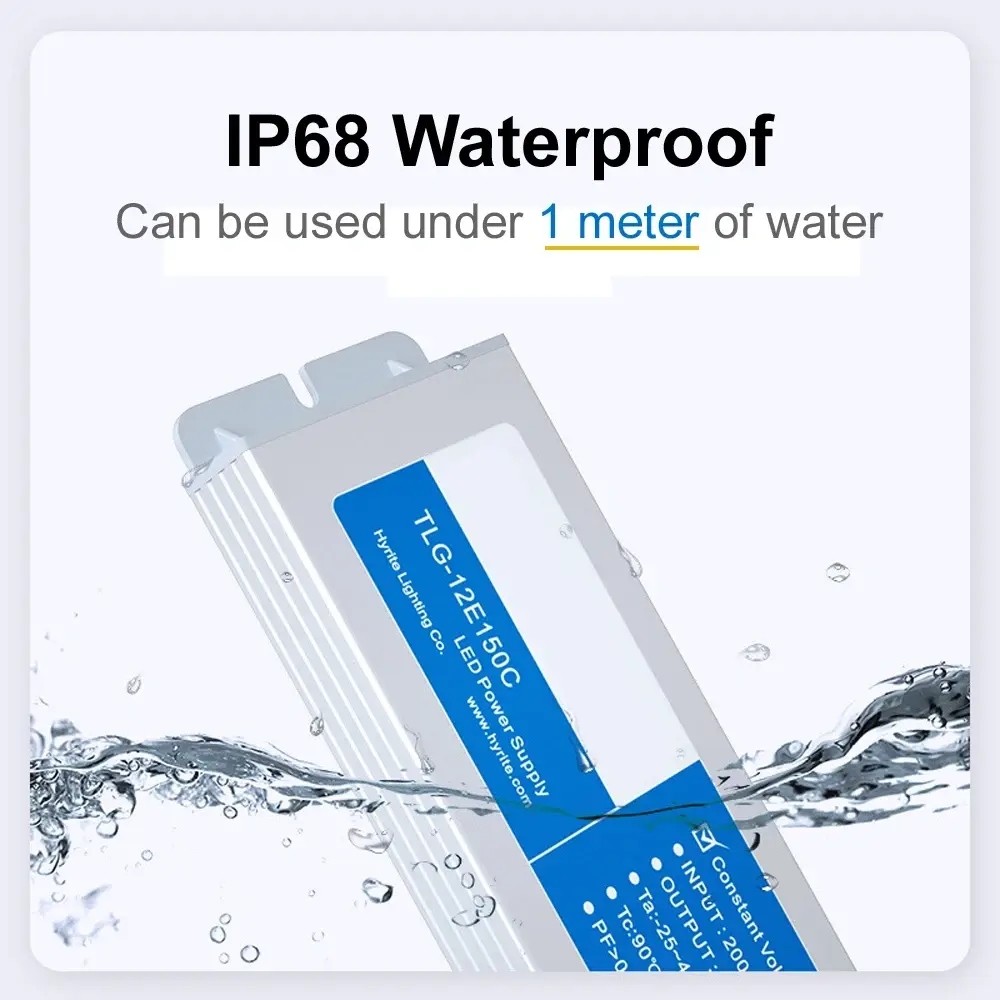
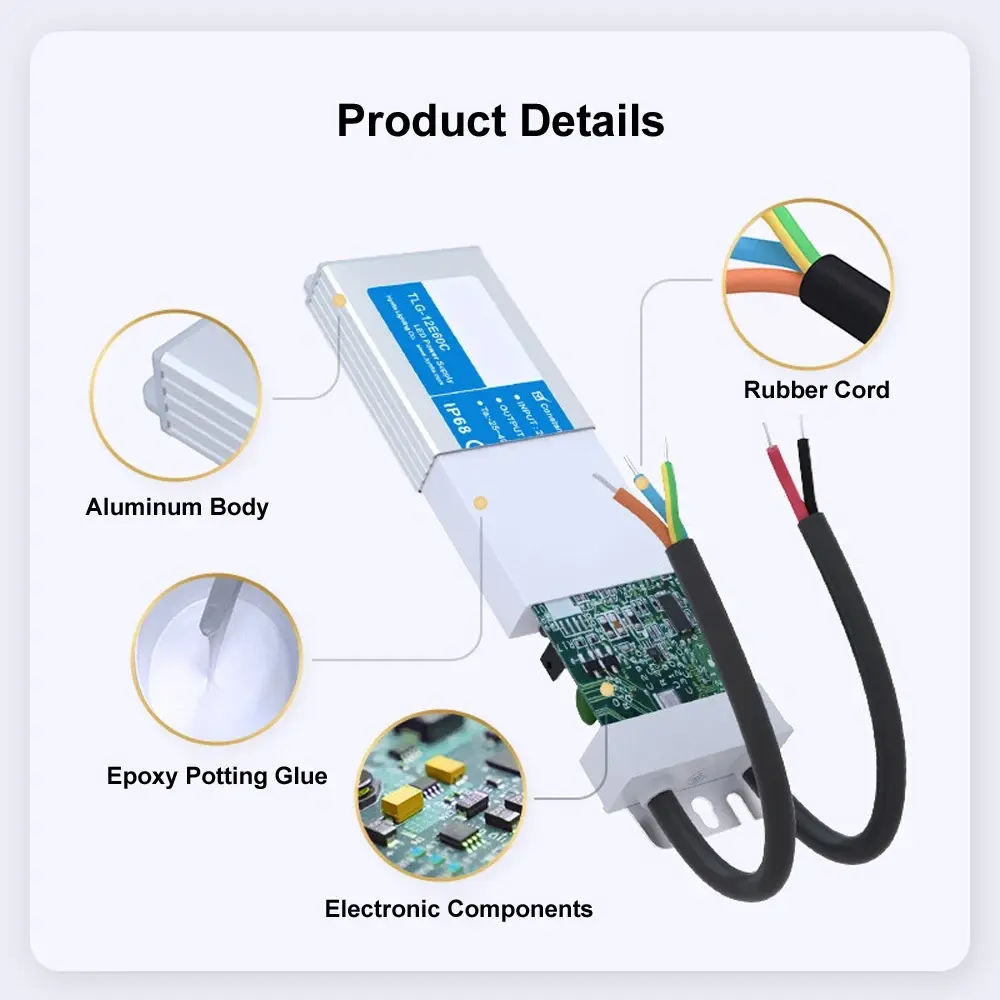
Waterproof LED power supplies are different from regular ones because they are built to work in tough conditions. Sealed housings have metal or polycarbonate casings that don't rust and silicone seals that keep the circuits inside. IP grades show how well something is protected. For example, IP65 protects against dust and water jets, IP66 protects against strong water streams, and IP67 protects against being submerged for a short time. These grades are very important for garden lighting, parking lot lighting, and marine applications where the light is always exposed to water.
Core Functions and Performance Characteristics
These units change the energy from the wall outlet to a low-voltage DC output that can power LED panels. Constant voltage models keep the output steady (12V or 24V) for LED strips and modules. Constant current models control the flow for high-power LEDs to keep them from overheating. Ratings of more than 90% efficiency cut down on wasted energy, which means lower operating costs over the fixture's lifetime. Extreme conditions, from Arctic sites to desert settings, can be accommodated by operating temperature ranges from -40°C to +70°C.
Safety Features That Protect Your Investment
Modern waterproof LED drivers have a lot of safety features built in. Overvoltage protection (OVP) stops changes in the LED power supply, short-circuit protection (SCP) stops major failures, and overtemperature protection (OTP) stops units from working before they do damage. Surge protection with a rating of 4kV or higher keeps sensitive equipment safe from lightning hits and problems with the power grid. These features lower the cost of upkeep and make the system last longer, which is especially helpful for setups that need access with lifts or scaffolding.
Choosing the Right Waterproof LED Power Supply for Your Projects
Matching Power Ratings to LED Fixtures
Doing accurate load calculations keeps you from underpowering or oversizing. To find the total watts, multiply the number of LED fixtures by their power usage and then add 20% to account for the drivers' long life. A job that uses 300W needs a motor that can handle at least 360W. When running long cables, voltage drop is something that needs to be thought about. Higher voltage systems (48V) lose less energy than 12V systems. To make dimming work, you need to match certain types of drivers—0-10V, DALI, or PWM—with control systems that are listed in the project documents.
Environmental Factors and IP Rating Selection
Project locations determine the amount of security that is needed. Coastal sites need units with an IP67 rating and conformal coats that stop salt spray damage. IP68 submersible grades are good for outdoor lighting that is buried. With IP65 protection, covered building uses under eaves may work fine. Extreme temperatures need to be derated. For example, a driver rated for 40°C ambient may need its capacity lowered when placed in 60°C areas that are common in enclosed signs or under awnings.
Certification Requirements for Global Compliance
For international projects, certain certifications are needed. UL and cUL listings are needed for installations in North America, CE marking meets the needs of the European Union, and RoHS compliance limits the use of dangerous materials. In many U.S. states, DLC qualification makes energy refunds possible. Standards for energy efficiency, such as Energy Star or NEMA Premium, have an effect on the acceptance of specifications. Before finishing the purchase, make sure that the licenses meet the needs of the target market. If they don't, it could lead to costly delays or failures to comply during inspections.
Evaluating Supplier Reliability and Customization
There are more than just price factors that go into evaluating a supplier. Quality management systems are shown by manufacturing approvals like ISO 9001. The ability to meet bulk requests within needed lead times is based on production capabilities. Customization options, like changing the output voltage, physical measurements, or adding special connections, let you meet the needs of any project. How quickly technical help responds during the design and troubleshooting stages shows how well the partnership will work in the long run. Before you buy a lot of something, especially for mission-critical uses, ask for sample pieces to try.
Comparing Waterproof LED Power Supplies with Other Power Solutions
Waterproof LED Drivers vs. Traditional Transformers
In legacy systems, traditional magnetic transformers that change 120V to 12V are still popular, but many projects are now upgrading to more efficient and reliable LED power supply solutions. However, they are not very efficient (usually only 70–80%), so they make too much heat and use more energy. Thanks to switched-mode power supply (SMPS) technology, waterproof LED drivers can reach 90 to 95% efficiency. Since transformers don't control the current, changes in voltage cause LED light to change. LED-specific drivers keep the output constant even if the input changes. This keeps sensitive semiconductor junctions from breaking down too quickly. Size studies show that small LED drivers are better for fitting in tight spaces or as a retrofit.
Constant Voltage vs. Constant Current Outputs
The output type is chosen based on the needs of the application. Different types of LEDs, such as tape lights, sign modules, and low-power artistic devices, are powered by constant voltage drivers. Constant current drivers work well with high-power LEDs in floodlights, streetlights, and architectural washes where precise current control keeps the LEDs from getting too hot. When systems mix output types, compatibility problems happen; choosing the wrong driver types leads to flickering, shorter lifespan, or failure right away. Check the manufacturer's specs for the LED light before choosing a driver.
Risks of Non-Waterproof Alternatives in Outdoor Applications
Putting standard indoor-rated gear in outdoor settings opens the door to a number of failure modes. Circuit boards degrade when moisture gets into them, which leads to short circuits and ground failures. Temperature changing makes air inside shelters condense, which speeds up the breakdown of parts. UV light breaks down plastic housings, which lets water in. Maintenance costs go up because fixtures need to be replaced more often, and workers have to be paid to get to fitted fixtures. Electrical problems that start fires or put people at risk of electrocution raise insurance and lawsuit issues. The small benefits in the short term will never be worth the risks and costs of rebuilding in the long term.
Procurement Guide for Waterproof LED Power Supplies
Identifying Trusted Suppliers and Manufacturers
Some sourcing routes are direct connections with manufacturers, approved distributors, and B2B platforms that have been checked out. When you buy directly from the manufacturer, you can make changes and get reasonable prices on large orders, but you have to place a larger minimum order. Authorized wholesalers offer smaller lot sizes, local supplies, and faster shipping, which is helpful for retrofit jobs that need to be done quickly. Multiple sellers are brought together on online sites so that prices can be compared and specifications can be narrowed down. Before hiring new suppliers, check their business licenses, plant audit records, and customer references.
Knowing how prices work keeps you from going over budget and makes sure that the value matches your quality standards. Unit costs go down as more are bought; buying 100 units usually gets you 15-20% off compared to buying 10 units. Customization comes with tooling fees that can be anywhere from $500 to $3,000. Extra guarantees that cover more than the usual 3–5 years cost an extra 10–15 percent, but they lower the risk for important infrastructure. Different suppliers offer different payment terms. For new relationships, it's common to require a 30% fee and the remaining 70% before shipping. For existing relationships, terms may be Net 30 or Net 60.
Logistics and Delivery Planning
International shipping needs a lot of people to work together. FOB prices don't include shipping or import taxes, but DDP prices do. DDP prices include all costs to location. For stock things, lead times are between 2 and 4 weeks. For special production runs, they are between 8 and 12 weeks. There are faster choices that cost more. Use the right anti-static and shock-absorbing materials to properly package gadgets. Make sure that supplies happen at the same time as installations so that there are no problems with storage and no damage from bad storage.
After-Sales Support and Technical Assistance
Post-purchase help quality is what sets sellers apart. Technical teams that are quick to respond can help with installation issues, wire diagrams, and system interaction. The steps for filing a warranty claim should be clearly written down, and there should be choices for early replacements to cut down on downtime. Spare parts are available to make sure that the system can be maintained for a long time after the guarantee period is over. Some providers offer on-site commissioning help for big setups, which is helpful for hard projects that need to be done quickly. When choosing a supplier, look at these service aspects as well as the original unit price.
Trusted Brands and Innovation in Waterproof LED Power Supplies
Established Market Leaders
Mean Well is the market leader in industrial LED power supply, with a wide range of IP67-rated products that can handle 15W to 600W. Their HLG and ELG models have customizable output, input voltage that works with all devices, and a lot of safety features. Philips Advance uses decades of lighting experience to make outdoor-rated Xitanium motors that work with smart lighting systems. Tridonic focuses on smart building integration with waterproof DALI-2 drivers that allow for improved control and energy management. Millions of units have been put under these brands' names in a wide range of temperatures and situations, showing that they are reliable.
Emerging Specialized Manufacturers
Niche makers fill in the holes in the product lines of larger companies. Ultra-compact drives can fit into luminaires with limited room without lowering performance. High-voltage DC systems (96V, 120V) use less power and let lighting cables run farther for big areas. Extreme-temperature rated units work effectively in cold storage areas or industrial ovens. Biocompatible products meet the needs of food processing facilities. These experts solve specific technical problems for difficult uses, but their brands aren't as well known as those of bigger, more well-known companies.
Future Trends Shaping the Industry
As technology keeps getting better, waterproof LED drivers can do more. As chip technology gets better, improvements in efficiency get closer to the potential limits. IoT connectivity makes predictive repair possible by keeping an eye on things in real time and tracking their progress. When you integrate wireless controls, you don't have to run ducts for wires for lighting controls. Recycling programs and products that can be recycled are pushed by sustainability efforts. Small shapes make it easier to integrate into lighting fixtures that are getting smaller and smaller. These innovations deal with changing energy rules, smart city projects, and the need to lower the total cost of ownership, which is a big factor in modern purchasing choices.
Conclusion
When choosing waterproof LED power supplies, you have to think about the technical specs, the needs of the surroundings, the regulations, and the supplier's abilities. When you choose the right IP rating, figure out the power, and check the approval, you can avoid costly failures and project delays. Understanding the differences between waterproof drives and other options is important for designing the best system. Finding trusted suppliers with good products, low prices, the ability to make changes, and strong after-sales help is key to successful procurement. When you buy waterproof LED drivers that are properly defined, you get long-term benefits like less upkeep, lower energy costs, and reliable performance in demanding business, industrial, and municipal lighting applications.
FAQ
How do I verify a waterproof LED power supply suits outdoor industrial environments?
Check that the IP rating fits the amount of environmental exposure—at least IP65 for covered outdoor places and IP67 for direct weather exposure. Check that the working temperature ranges can handle the highs and lows of the local climate, both in the summer and the winter. Check the material requirements for UV-resistant housings and screws that won't rust, especially if you work near the coast or with chemicals. Ask for test results that show you meet the standards for entry protection and data on how well the insulation works.
What certifications are essential for global export compliance?
For North American markets, you need to have a UL or ETL listing. For the European Union, you need a CE mark, and for Australia, you need a SAA approval. RoHS compliance limits the use of dangerous materials in devices, which is needed in most developed markets. Utility rebate programs are made possible by energy saving ratings like DLC or Energy Star. Some markets need licenses that are specific to the country, like CCC for China and PSE for Japan. Check the needs of the target market early on in the buying process to avoid sending non-compliant goods and having them rejected at the port.
What troubleshooting steps address common on-site operational challenges?
Most of the time, flickering is caused by voltage drop from wire that is too small or links that are too loose. Make sure the cable gauge matches the load and distance. If the input power is wrong, the safety circuits fail, or the dimmer isn't compatible, there may be no output. Overheating means there isn't enough air flow or the temperature outside is higher than what's recommended; move the drivers or add cooling. Even if the device has an IP rating, water can still get in if the cable glands are broken or the fixing isn't done right. Check the seals and make sure the drain holes face downward. For help with diagnosis, send voltage readings and information about the surroundings to the manufacturer's expert support.
Partner with USKYLED for Reliable Waterproof LED Solutions
USKYLED offers complete lighting options that include our high-performance, waterproof LED power supply parts and our cutting-edge lights. Our engineering team makes specs that are special to your project and take into account its environmental challenges, power needs, and control system integration requirements. You can email our team at sales@uskyled.com to talk about your buying needs, get technical specs, or get price quotes for large orders from a reliable LED power supply manufacturer that wants to build long-term partnerships that work.
References
1. National Electrical Manufacturers Association (NEMA). Standards Publication 410: Performance Testing for LED Luminaires and Retrofit Kits. 2020.
2. International Electrotechnical Commission. IEC 60529: Degrees of Protection Provided by Enclosures (IP Code). 3rd Edition, 2013.
3. U.S. Department of Energy. LED Power Supply Efficiency and Reliability: Market Assessment and Technology Trends. Solid-State Lighting Program, 2019.
4. Illuminating Engineering Society. TM-21-19: Projecting Long-Term Luminous Flux Maintenance of LED Light Sources. 2019.
5. Institute of Electrical and Electronics Engineers. IEEE Standard 1789-2015: Recommended Practices for Modulating Current in High-Brightness LEDs for Mitigating Health Risks to Viewers. 2015.
6. DesignLights Consortium. Technical Requirements for LED Outdoor Lighting and Controls. Version 5.1, 2022.

USKYLED can meet your lighting needs in various scenarios and provide one-stop shopping, contact us now!
Why You Should Choose USKYLED?
![What is Dimmable Track Lighting for Museum: Best Guide [2025]](/icms/upload/0d08cc601e7611f0b542b3ca0c0f4a83/pic/knowledgemanager-knowledgepic/e7879f32605f11f081911f363b8c1ed0/Directory/20250717 dimmable track lighting -1(1)_1752739217941.webp)