Top Hardscape Lighting Ideas for Retaining Walls
Adding hardscape lighting to retaining walls makes them safer and more beautiful at the same time. It turns everyday building parts into architectural focus points. These different kinds of lighting choices make it easier to see the tracks, bring out the details in the textures, and make dramatic scenes at night while also lowering the risk of accidents. LED lights made for retaining walls that are made by professionals last longer, use less energy, and let you change the lighting patterns to make both business and home properties look better. Advanced control systems and smart placement of the lights make this possible.
Introducing Hardscape Lighting for Retaining Walls
Hardscape lighting is a type of outdoor lighting that can be used to light up things like retaining walls, gardens, walks, and stone buildings that aren't plants. Usually, landscaping lighting is used to highlight plants and open areas. It can be hard to figure out how to firmly mount these pieces on masonry surfaces and how to make sure the beam angles are just right to show off the structure's features.
When you put lights on retaining walls, you need lights that can last for a long time and work well in rough conditions. Different wall materials, such as natural stone, concrete blocks, and engineered wood systems, need to be able to be fixed with the same tools. In business settings, low-voltage LED systems that work at 12V or 24V are often used to keep things safe while using as little power as possible.
Technical Specifications for Retaining Wall Applications
Waterproof grades of IP65 or IP67 are used on modern LED lights that are made to be put into retaining walls. This keeps water out. Marine-grade metal alloys were used to build the building, and they don't rust in seaside places because they are powder-coated. The material is shown correctly when the color rendering value is better than 80 CRI. The beam angles can be changed from small 15-degree spots to wide 120-degree washes to fit different patterns.
When it comes to optical performance, good retaining wall lamps spread light out widely without creating harsh glare zones. Optical systems have screens that don't reflect light and mirrors that are carefully made to send light exactly where it's required. Because of these technical aspects, business projects that need to meet safety standards and look the same need professional-grade lights.
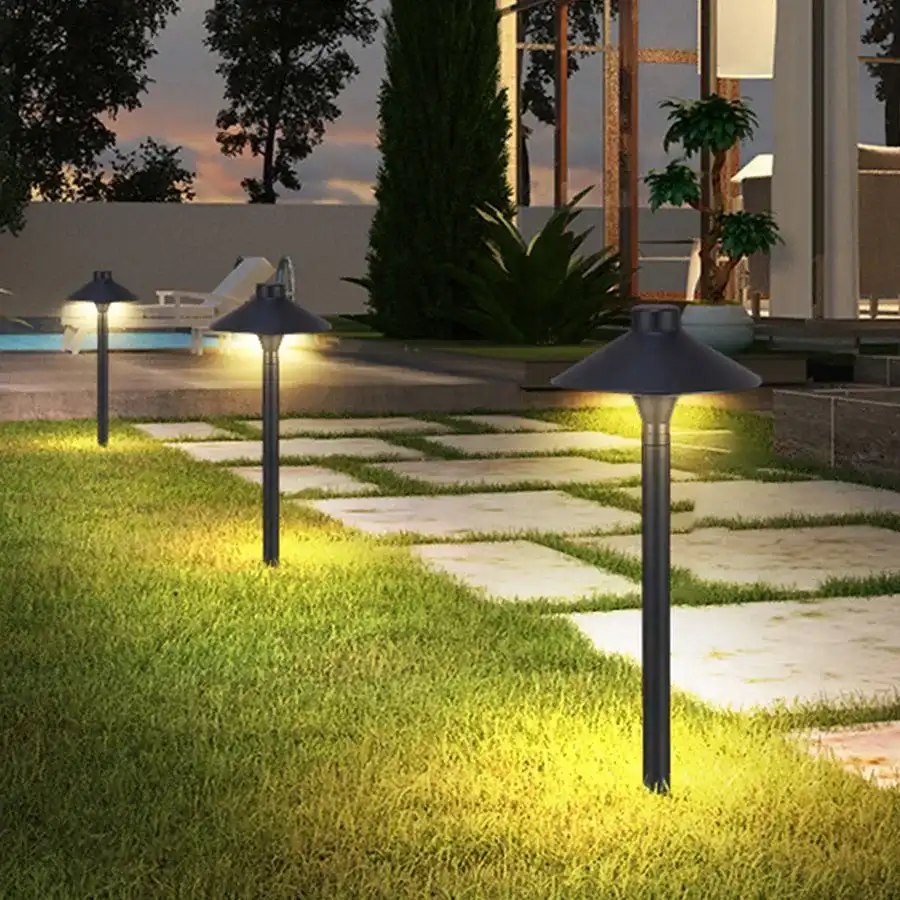
Top 7 Hardscape Lighting Ideas for Retaining Walls
It's important for retaining hardscape lighting to use a range of lighting types to make it safer and look better. People who work in buying can use these tried-and-true techniques with confidence for a wide range of project needs.
Recessed Step Lighting Systems
Because recessed step lights are built into retaining walls, they give off soft light that is good for safety without having any parts stick out and get broken. Most of these units have waterproof frames that let them be placed flush with walls. They are 3 to 4 inches in diameter. Between 2700K and 3000K, the LED screens give off warm white light. This keeps the roads clear and makes them look nice.
As part of the installation process when building or updating, core drilling holes that are the exact right size is done. To make sure the electrical links last a long time, marine-grade wire nuts and waterproof junction boxes are used. Good underground lights have LED units that can be switched out and lens access that doesn't need any tools, which makes maintenance easy.
LED Strip Lighting Integration
Since LED strip lighting is continuous, there are no gaps in the light that goes on top of or below retaining walls. Professional strips have 120 diodes per meter of high-density LED spacing. This means that the light is spread out evenly and there are no hot spots to be seen. Because they are bendable, the circuit boards can fit on curved surfaces and keep the color temperature the same all the way through.
To protect the LED strips from damage and the weather, these systems need metal tubes with lenses that spread the light. Another way the channels help the LEDs work better is by letting heat escape. Control systems let you change the color temperature and lower the lights to match the seasons and the scene around them.
Solar-Powered Hardscape Solutions
Solar hardscape fixtures offer installation flexibility in areas without accessible electrical infrastructure. Modern photovoltaic panels generate sufficient power for all-night operation using high-efficiency monocrystalline cells and lithium-ion battery storage systems. The autonomous operation eliminates ongoing electrical costs while supporting sustainability initiatives.
Quality solar fixtures incorporate dusk-to-dawn sensors and intelligent charge controllers that optimize battery performance across varying weather conditions. The LED arrays typically provide 6-8 hours of continuous illumination following full daylight charging cycles. These systems work particularly well for remote retaining walls in park settings or residential applications where trenching electrical conduits would prove expensive.
Wall Washing and Uplighting Techniques
If you want to make sure that the lighting on your stone and mortar joints is even, you should put wall washing lights 18 to 24 inches away from the retaining walls. The wide beam angles get rid of the scalloping effects and show off the beauty of the building materials as they are. Most of the time, these things are put up on nearby grade levels or fit in with the plants around them.
Narrow beam lights at the base of retaining walls are used to light up rough surfaces and make dramatic shadow effects. When the light hits something from behind, it shows how deep the materials and building features are, which you can't see during the day. Things that are lit up will look warmer or more current if you choose a color temperature between 2700K and 4000K.
Integrated Planter Lighting
Lights that shine on both the building and the plants in pots on retaining walls are very helpful. It's important to think about how plants grow and how the seasons might change over time and make it hard for light to get through. How the fixture is placed needs to take into account the dirt and how it will be watered.
Put recessed well lights in pots. They light up the leaves of the plants and draw attention to the walls behind the plants. The waterproof design can handle being watered several times year and changes in the amount of water in the soil. With fixture heads that can be moved, you can move them around as the plants grow and change shape.
Smart Control Integration
You can control hardscape lighting systems from afar with intelligent lighting settings, or you can set them to work on your own. With these tools, you can direct each light separately, group scenes together, and join to bigger networks of landscape lighting. Because of the wireless connection, installs that are done after the fact don't need any extra control wires.
Because they can tell when someone is in a room and collect sunlight, smart systems help save energy. The schedule tools let you change how many lights are on based on the season and the needs of the event. Apps for phones let you see how a system is running right now and send out fix tips before things go wrong.
Color-Changing Accent Features
You can change the colors of RGB-W LED lights on the fly for holidays and other events. Most of the time, these systems aren't the only source of light; they're added to major white light groups. Since you can mix colors, you can make your own shades that match the name of your business or a holiday theme.
When they are in normal white modes, professional lights that change colors have their own white LED circuits that keep the light quality good. The control systems can save your own color scenes and make multiple lights work together at the same time. Each LED in a high-quality unit is individually adjusted to make sure that the colors match properly throughout the installation.
How to Select the Right Hardscape Lighting for Retaining Walls?
If you want to pick the right fixtures, you need to balance technical performance requirements with project-specific factors such as budget, maintenance, and design goals. Procurement professionals must evaluate multiple criteria to achieve optimal long-term value and project success. This is particularly important when selecting hardscape lighting, where performance, durability, and visual integration all play a critical role in overall project outcomes.
Durability and Environmental Ratings
Outdoor situations like salt spray, freeze-thaw cycles, and UV light that breaks things down quickly don't cause marine-grade building materials to rust. For taps that can last at least 3000 hours with salt spray, look for ones with marine-grade aluminum alloy bodies and 316L stainless steel parts. Anodizing in Class I or powder paints should be used for the finishes.
The IP number tells you how well the unit protects against water and dust getting in. For most uses of retaining walls, IP65 ratings are fine. However, IP67 ratings are better for protecting things that might get wet when it rains a lot or the irrigation system stops working. Make sure that all of the waterproof grades used in the system's electrical links match.
LED Performance Characteristics
LED screens that give off 120 lumens or more per watt or more use the least amount of power while still giving off enough light. As long as the color rendering value is above 80 CRI, the elements will be shown correctly. This is especially important for building and stone that has real layers and features. According to the LED binning specs, all the lights should have the same color at all times during the job.
Thermal management systems keep junction temperatures below what the manufacturer suggests. This keeps LEDs from breaking down too fast. Look for light sources that have heat sinks with the right number of fins spaced out properly and thermal contact materials that quickly move heat from groups of LEDs to the air around them. Good lights still give off 90% of their original brightness power after 50,000 hours of use.
Installation and Mounting Considerations
Different kinds of retaining walls need to be able to be fixed with different methods. These include those made of natural stone, concrete blocks, and man-made wood. Fixing pegs that can be adjusted let you exact the beam's direction while taking into account small flaws in the wall. The nuts on the tools should be made of 316 stainless steel and be the right size for the roof's loads and wind exposure.
In terms of safety, 12V or 24V low-voltage systems are better than line-voltage systems because they use less power. Make sure that the transformer's size leaves 20% of capacity open in case the system needs to grow in the future. To make sure the device always works the same, the wire gauge figures need to take into account how much power can drop over long cable runs.
Compatibility with Wall Materials
Putting up concrete or wood retaining walls is not the same as putting up stone and rock surfaces. Some natural stone may need special grounding systems to keep it from breaking along known fault lines when it is being put in place. Standard brick bolts can be used on concrete, but for wood walls, you need wood screws that won't rust and have the right amount of penetration.
If you are putting fixtures on things that will change temperature a lot, you should think about how they will expand and shrink when they get hot or cold. It should be possible to move around with the fastening tools, and it shouldn't put too much stress on furniture or walls. When sealer is used around holes, it needs to be able to bend even when the temperature changes throughout the year.
Installation and Maintenance Best Practices for Hardscape Lighting
Professional building methods and plans for routine care have a big impact on how well and how long a system works. When business-to-business clients follow these tips, they can avoid service gaps and get the most out of the lights they buy.
Professional Installation Guidelines
Safety rules say that all power lines must be turned off before the repair can start. Lock out/tag out and use precise test tools to make sure the power is off before working with any electrical parts. When working near electricity, make sure you have the right safety gear, like gloves and safety glasses that don't carry electricity.
You check the layout to make sure that the lengths between the lights are set up correctly so that there are no dark spots or too much overlap between the units. Before you start putting the fixtures in place, use optical tools or the manufacturer's direction for spacing to find the best spots for them. Mark all the places where you will attach things and make sure the structure is strong enough before you drill the holes.
Electrical System Requirements
Low-voltage transformers should be put in cases that are waterproof and have enough air flow to get rid of heat. Transformers should be big enough to handle the full load of the system plus an extra 20% in case more gear is added later. Put ground fault circuit interrupters on all wires that power outdoor lights to make the electricity safer.
When you put wires in place, they need to be allowed for straight burial and be able to handle being buried and in wet places. Most of the time, low-voltage lines for outdoor lights need to be buried at least 6 inches deep to follow local electrical rules. Use waterproof splice joints and stay away from basement splices as much as possible to prevent moisture-related failures.
Preventive Maintenance Protocols
Once a month, take a look to see if there are any loose mounting screws, broken glasses, or plant growth that could block the light. Clean the lenses of your chandelier with mild soap and a soft cloth to keep the best light coming through. Cleaners that are too rough could scratch the lens or damage the layers that protect it.
The power levels of the system are checked once a year by an electrician, who also looks for problems before they get huge. Make sure that all wire runs are getting enough power by checking the voltage at the light connections. Look for rust or burns on all the electrical connections. This could mean that the connections aren't tight enough or that water is getting in.
If you replace old parts before they break, your system won't break down when you need it the most. Based on how they are used and how long they last, transformers and control systems might need to be changed every 10 to 15 years. It's more likely for LED screens to last 50,000 hours or more.
Trusted Hardscape Lighting Brands and Where to Source Them
Reliable supplier partnerships ensure consistent product quality and technical support throughout project lifecycles. Leading manufacturers invest heavily in research and development programs that deliver innovative solutions for challenging applications. This is especially important in hardscape lighting, where durability, weather resistance, and seamless integration with architectural elements are critical for long-term performance.
Industry-Leading Manufacturers
Philips Outdoor maintains extensive product lines specifically engineered for hardscape applications including retaining walls, pathways, and architectural accent lighting. Their lights incorporate advanced LED technology with intelligent thermal management systems that maintain consistent performance across wide temperature ranges. The company provides comprehensive technical support including photometric calculations and custom mounting solutions.
Kichler Landscape specializes in residential and commercial outdoor lighting with robust product warranties and extensive distribution networks throughout North America. Their retaining wall fixtures feature tool-free maintenance access and modular LED replacement systems that simplify long-term service requirements. The brand emphasizes aesthetic design elements that complement architectural themes.
FX Luminaire targets the professional landscape lighting market with fixtures for demanding commercial applications. Their products undergo rigorous environmental testing including salt spray exposure, thermal cycling, and vibration resistance verification. The manufacturer provides comprehensive training programs for installation contractors and design professionals.
Sourcing Strategy Considerations
Direct manufacturer relationships provide access to technical support resources and custom modification services that may prove valuable for large-scale projects. These partnerships also enable bulk purchasing arrangements that reduce per-unit costs while ensuring product availability for project schedules. Evaluate manufacturer financial stability and market presence before committing to long-term supply agreements.
Regional distributors offer local inventory availability and reduced shipping costs for standard product lines. They typically maintain technical expertise regarding local installation practices and code requirements. Distributor relationships prove particularly valuable for projects requiring rapid replacement parts or emergency service support.
International sourcing options may provide cost advantages for large-volume purchases, particularly when combined with other lighting product categories. However, consider shipping lead times, customs procedures, and warranty service availability when evaluating overseas suppliers. Verify that imported products meet all applicable safety certifications and performance standards.
Conclusion
Professional hardscape lighting systems transform retaining walls from purely functional structures into captivating architectural features that enhance safety, property values, and nighttime ambiance. The strategic integration of LED technology with intelligent controls creates energy-efficient solutions that deliver decades of reliable performance. Successful implementations require careful attention to technical specifications, environmental ratings, and maintenance accessibility to ensure optimal long-term value. By partnering with established manufacturers and following proven installation practices, procurement professionals can specify lighting systems that exceed client expectations while minimizing operational costs and service requirements.
FAQ
What distinguishes hardscape lighting from traditional landscape lighting?
Hardscape lighting focuses specifically on illuminating built structures like retaining walls, patios, and walkways rather than vegetation or open spaces. These fixtures require enhanced durability for mounting on masonry surfaces and specialized beam patterns that highlight architectural textures. The installation methods differ significantly, often involving core drilling and permanent mounting systems rather than stake-mounted units used for landscape applications.
Can existing retaining walls accommodate lighting retrofits without major reconstruction?
Most existing retaining walls can accommodate lighting retrofits through surface-mounted fixtures or carefully positioned adjacent installations. The feasibility depends on available electrical infrastructure and structural accessibility. Surface-mounted options eliminate the need for wall modifications, while recessed installations may require selective drilling that must avoid disturbing structural integrity.
How do LED hardscape lighting systems reduce operational costs?
LED technology delivers 80-90% energy savings compared to traditional halogen or incandescent systems while providing 25-50 times longer operational life. The reduced maintenance requirements minimize service calls and replacement costs over system lifecycles. Smart control integration enables automated scheduling and dimming that further optimizes energy consumption based on actual usage requirements.
USKYLED: Your Trusted Partner for Professional Hardscape Lighting Solutions
USKYLED delivers cutting-edge LED hardscape lighting solutions engineered for demanding commercial applications and large-scale projects. Our advanced fixtures feature high CRI performance, flicker-free operation, and smart control compatibility that meets the rigorous requirements of professional installations. Contact our expert team at sales@uskyled.com to discuss your retaining wall lighting requirements and discover how our innovative LED technology can enhance your next project.
References
1. Illuminating Engineering Society. "Recommended Practice for Outdoor Environmental Lighting." IES RP-33-14, 2014.
2. American National Standards Institute. "Safety Requirements for Low Voltage Landscape Lighting Systems." ANSI/UL 2108, 2018.
3. Davis, Michael J. "Hardscape Lighting Design: Technical Guidelines for Retaining Wall Applications." Landscape Architecture Technical Information Series, Vol. 15, 2019.
4. International Association of Lighting Designers. "Best Practices Manual for Outdoor Architectural Lighting." IALD Publications, 2020.
5. Thompson, Sarah K. "LED Performance Standards for Outdoor Hardscape Applications." Journal of Professional Landscape Lighting, Issue 42, 2021.
6. National Electrical Manufacturers Association. "Environmental Performance Criteria for Outdoor LED Luminaires." NEMA SSL 7A-2017, 2017.

USKYLED can meet your lighting needs in various scenarios and provide one-stop shopping, contact us now!
Why You Should Choose USKYLED?
![What is Dimmable Track Lighting for Museum: Best Guide [2025]](/icms/upload/0d08cc601e7611f0b542b3ca0c0f4a83/pic/knowledgemanager-knowledgepic/e7879f32605f11f081911f363b8c1ed0/Directory/20250717 dimmable track lighting -1(1)_1752739217941.webp)