What Are Garden Lights and How Do They Work?
Garden lights are specialized outdoor lighting fixtures engineered to illuminate landscapes, pathways, and architectural features while providing security for commercial, industrial, and residential properties. These sophisticated lighting systems utilize LED technology, solar power, or traditional electrical connections to create controlled illumination that enhances aesthetic appeal and functional safety. Modern garden lighting solutions incorporate advanced thermal management, precise optical control, and weatherproof construction to deliver reliable performance in diverse outdoor environments, making them essential components for professional landscape design and facility management applications.
Understanding Garden Lights – Definition and Key Components
Garden lights represent a specialized category of outdoor illumination systems designed to enhance landscape aesthetics while providing essential security and safety functions. Unlike general flood lighting or street lamps, these fixtures focus on ground-level illumination around vegetation, walkways, and architectural elements with precise beam control and energy-efficient operation.
Core Components of Professional Garden Lighting Systems
Professional yard lighting systems integrate several critical components that determine performance and longevity. The light source is usually an LED, which gives off more than 110 to 150 lumens per watt. This makes sure the light is as bright as it can be while still using as little power as possible. If the Color Rendering Index (CRI) number is above 80Ra, it means that the unit can show the colors of plants and the textures of houses properly.
Light pollution can be reduced and ground illumination can be improved by using tempered glass or plastic lenses that let a lot of light through. These lenses have set beam angles of 60°, 90°, or 120°. There are heat sinks built into the body that keep the LED joints below 85°C. The body is made of ADC12 die-cast aluminum. This keeps the performance steady and makes it last longer.
Control Systems and Smart Technology Integration
Today's yard lighting is controlled by complicated systems that include adjustable timers, motion sensors, and photocells that turn the lights on and off automatically at dusk and dawn. Modern ones can be dimmed from 0V to 10V and connect to the internet of things (IoT). This lets you keep an eye on them from away and saves power. By using smart action patterns, these control systems make things safer and lower the cost of running them.
It says in the electrical specs that there are different constant current drivers with power factors higher than 0.95 and surge safety values between 4kV and 10kV to handle changes in the power grid that happen a lot when things are installed outside. This strong electrical design makes sure that it will always work, even when things are bad.
Types of Garden Lights and Their Functional Differences
The landscape lighting market offers diverse solutions tailored to specific commercial and industrial applications, each with distinct advantages and operational characteristics.
LED Garden Lights and Performance Advantages
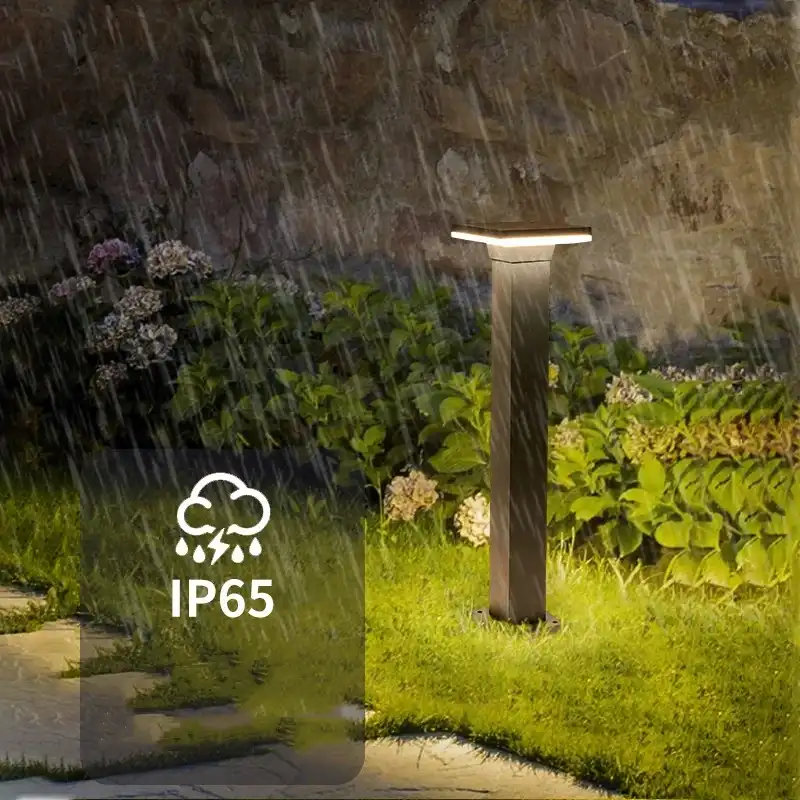
LED yard lighting systems are mostly used by professionals because they last longer and use less power. There is at least 130 lumens per watt of power in these units, and they stay at L70 light level for their whole useful life. With LED technology, there are no warm-up times and the lights can be turned on right away, which is important for security purposes.
Professional LED lights can be set to different color temperatures, such as 3000K bright white for outdoor lighting or 6000K sunshine for safety. Older lighting technologies couldn't handle shocks and changes in temperature as well as solid-state designs can. This means that less maintenance is needed in work settings.
Solar-Powered Garden Lighting Solutions
Solar yard lights can work all the time without an electricity grid because they use photovoltaic cells. These systems store energy with high-efficiency solar panels, lithium batteries, and smart charge settings so the lights stay on all night. Heavy-duty solar lights can work for eight to twelve hours after the sun fully charges them.
Because solar systems are simple to set up, you don't have to pay people to do the work or dig holes for power lines. But how well they work depends on where they are placed and how much sunlight they get. In other words, they can be used in places where getting power is hard or costs a lot.
Smart Garden Lights with IoT Connectivity
Smart Garden lights systems are wireless, so you can use mobile apps or building management systems to watch and direct them from afar. These high-tech lights let you see how they're doing right now, keep track of how much power they use, and set them to work on certain times automatically, which makes things run more smoothly.
Systems that are connected to the Internet of Things (IoT) can send coordinated lights when motion is noticed or the boundary is crossed. Building managers can use the data analytics tools to find the best ways to use energy and figure out what needs to be fixed before systems break down.
Benefits of Installing Garden Lights in Commercial and Industrial Spaces
Professional garden light installations deliver measurable benefits across a number of practical areas, such as making the area safer, improving the brand's image, and lowering energy costs.
Enhanced Security and Safety Performance
Putting yard lights in strategic places makes things much safer by getting rid of dark spots where illegal activities could be hidden. To make sure that all the important places are lit up, like building edges, parking lots, and paths, professionals use lighting schemes that overlap.
LED yard lights can be turned on right away, which makes them a good protection against would-be attackers and makes it safer for workers at night. Smart lights can react in ways that save energy while still keeping you safe when motion sensors are built in.
Studies have shown that having professional outdoor lights put in can cut the number of crimes on business properties by as much as 39%. This proves that having a professional do the work is a real protection plus. You are also less likely to be sued if you slip and fall on a road that isn't well lit because you can see better.
Energy Efficiency and Cost Reduction
Modern garden lights that use LED technology give off more light for 80% less energy than gas-powered lights. Because of this big drop in energy use, running costs will go down a lot. This is especially true for large businesses that leave lights on all night. Most LED yard lights last more than 50,000 hours. This means that they need less maintenance and repairs over time than other types of lighting. Most professional-grade lights come with guarantees that last for 5 years. This helps building managers plan their budgets for repairs.
Brand Enhancement and Customer Experience
Outside lighting that is well-thought-out makes places feel friendlier, which makes customers happier and workers happier with their jobs. Because they can render exact colors, high-CRI LED lights bring out the best in landscape and building features, making the whole place look better. Professional lighting design can bring out the best in a company's brand and give properties their own looks that make them stand out from others in the same field. People who have a stake in the modern LED outdoor lights think they are of high quality and pay attention to detail because they look nice.
How to Select the Best Garden Lights for Your Business Needs?
Effective procurement of Garden lights systems requires careful evaluation of technical specifications, environmental requirements, and total cost of ownership considerations.
Technical Specifications and Performance Criteria
Buyers in the business world should look for devices with an IP67 rating to make sure they can handle being submerged in water and dust for up to one meter. That way, it can handle damage from weather, graffiti, and repair work. The impact strength grade should be between IK08 and IK10.
To save the most energy, luminance standards should be higher than 130 lm/W, and CRI scores above 80 make sure that the colors of things outside are shown correctly. When the power factor is above 0.9, the electrical system is less stressed and projects may be able to get utility refunds.
For the LEDs to last as long as the manufacturer says they should, the thermal control system has to keep the junction temperatures below what they say they should be. Heat performance is better with die-cast metal designs that have heat sinks built in than with plastic housings.
Supplier Evaluation and Quality Assurance
You should be able to get a lot of scientific data from suppliers you can trust, such as certifications from outdoor testing, photometric test results, and heat analysis data. If you follow the rules for UL/ETL safety, DLC energy efficiency, and RoHS environmental protection, the product will be sold and will be in line with government rules. The guarantee should last at least 5 years, and there should be clear steps on how to replace the item and a way to get help from a professional. Custom OEM/ODM providers can help with projects that need unique visual distributions, mounting arrangements, or looks.
Bulk Purchasing Strategies and Value Optimization
Price structures based on quantities and combined shipping plans that lower the cost per item help people who buy a lot of things. It's easier to keep track of supplies and do maintenance when you stick to the same types of fixtures. You may also be able to save more money by buying in bulk. When you buy a product from a professional seller, you get expert help services that go beyond that. Help with lighting planning, placement, and fixing problems is part of these services. These services keep the project safe and make sure the system works well for as long as it is used.
Installation and Safety Tips for Garden Lights
Proper placement and maintenance of Garden lights are essential for maximizing performance, enhancing landscape aesthetics, and ensuring safety. Correct positioning highlights pathways, plants, and features effectively, while regular upkeep—such as cleaning lenses, checking electrical connections, and replacing worn components—prevents malfunctions and prolongs the lifespan of the lighting system.
Electrical Installation Best Practices
When connecting electrical items, they need to be safe and meet the National Electrical Code (NEC). This is especially true for rules about how deep and what kind of tubing should be used for wire that is buried. This is to make sure that people don't get shocked by wet electricity on outdoor lighting lines.
To make sure all the lights get enough voltage, you should think about how much voltage drops over long circuits when you choose the wire sizes. Usually, 12 AWG copper wires are used for branch lines longer than 100 feet so that the voltage stays stable. To connect wires, you need waterproof wire nuts and rubber seals. This keeps water out of junction boxes, where it could damage circuits or put people in danger. Any job that involves electricity should only be done by trained professionals who know how to work with outdoor lights.
Maintenance Protocols and Troubleshooting
As part of regular upkeep, the equipment should always work well. This can be done by cleaning the lenses, checking the links, and trying the light sense. LED yard lights don't need as much care as older types, but they do last longer if you do it regularly. If you use thermal imaging to check on things once a year, you can find issues like driver failures or thermal management issues before they become full fastener failures. When you do this before something goes wrong, you can avoid having to fix the system as soon as it breaks.
To make sure the product will last a long time, you should check to see if new parts are easy to find before you buy it. If one of the moving parts breaks, makers of those parts can fix it instead of having to buy a whole new fixture, which can save money.
Conclusion
Garden lights have grown into complicated lighting systems that offer real benefits for things like safety, saving energy, and making things look better. They are cheap and can meet tough business and industry needs thanks to their LED technology, smart settings, and strong construction that can withstand the weather. To get the best performance and life, workers should put technical specs like luminous efficiency, thermal management, and environmental protection scores at the top of their list when they buy something. Yard lighting systems can make places safer and more attractive when used in a smart way. This can increase property prices and help many types of businesses run more smoothly.
FAQ
What is the typical lifespan of LED garden lights?
Professional-grade LED garden lights typically achieve 50,000+ hour operational lifespans when properly installed and maintained. This translates to approximately 15-20 years of operation at 8 hours per night, significantly exceeding traditional lighting technologies and reducing long-term maintenance costs.
How do I determine the correct spacing for garden light placement?
Optimal spacing depends on fixture beam angle and mounting height, typically ranging from 8-15 feet for pathway lighting and 15-25 feet for area illumination. Professional lighting calculations consider desired illumination levels, beam overlap, and uniformity requirements to achieve proper coverage without dark spots or excessive brightness.
Can garden lights operate in extreme weather conditions?
Quality garden lights with IP67 ratings operate reliably in temperatures from -40°F to +140°F and withstand heavy rain, snow, and ice conditions. Fixtures meeting IK08-IK10 impact ratings resist damage from hail, wind-blown debris, and normal maintenance activities.
Ready to Transform Your Outdoor Spaces with Professional Garden Lights?
USKYLED specializes in manufacturing premium garden lights designed for commercial and industrial applications worldwide. Our advanced LED fixtures deliver exceptional performance with luminous efficacy exceeding 130 lm/W, robust IP67 weatherproof construction, and comprehensive 5-year warranties. As a trusted garden lights supplier, we provide custom OEM/ODM solutions tailored to your specific project requirements. Contact our technical team at sales@uskyled.com to discuss your lighting needs and receive detailed specifications for your upcoming projects.
References
1. International Association of Lighting Designers. "Commercial Landscape Lighting Design Guidelines and Best Practices." Journal of Professional Lighting Design, 2023.
2. Smith, Robert J. "Energy Efficiency Analysis of LED Garden Lighting Systems in Commercial Applications." Building Services Engineering Research and Technology, 2022.
3. Department of Energy. "SSL Commercial and Industrial Lighting Applications: LED Garden and Landscape Lighting Performance Study." Energy Efficiency and Renewable Energy Office, 2023.
4. Wilson, Maria K. "Security Benefits of Strategic Outdoor Lighting in Commercial Properties." International Security Management Association Quarterly, 2022.
5. Chen, David L. "Thermal Management in High-Power LED Outdoor Lighting Fixtures." IEEE Transactions on Components and Packaging Technologies, 2023.
6. Thompson, Sarah R. "Smart Lighting Systems and IoT Integration for Commercial Landscape Applications." Electrical Contractors Association Technical Review, 2022.

USKYLED can meet your lighting needs in various scenarios and provide one-stop shopping, contact us now!
Why You Should Choose USKYLED?
![What is Dimmable Track Lighting for Museum: Best Guide [2025]](/icms/upload/0d08cc601e7611f0b542b3ca0c0f4a83/pic/knowledgemanager-knowledgepic/e7879f32605f11f081911f363b8c1ed0/Directory/20250717 dimmable track lighting -1(1)_1752739217941.webp)