What are the lighting trends in 2026?
In 2026, the lighting business is going through a huge change that is being caused by the need to use smart technology, be more environmentally friendly, and make the user experience better. Smart lighting systems now have better IoT connection, which lets them work with building control systems and mobile apps without any problems. Energy economy is still very important, and the next version of LEDs can produce more lumens per watt while having less of an effect on the world. Outdoor step lights are a big trend right now because they have solar power, motion sensors, and weather-resistant designs that keep people safe while using the least amount of energy. These new ideas can be used in both homes and businesses because they allow solutions to be tailored to different building needs and government rules.
Emerging Paradigms in Outdoor Step Lighting for 2026
The landscape of outdoor step lighting is undergoing a fundamental shift in 2026, moving beyond conventional limitations that have long plagued the industry. Traditional outdoor lighting systems often used too much energy, didn't last long, and had control systems that weren't flexible enough to react to changing user needs and environmental circumstances.
Smart Technology Integration Revolutionizes Control Systems
These days, modern outdoor step lights use advanced smart technologies that make them much more useful and efficient. Motion monitors have improved over time to be able to accurately identify both people and things in the surroundings, like animals or wind-blown debris. These sensors can be set up to only turn on lights when they're needed. This can cut energy use by up to 70% compared to systems that are always on.
Timer-based controls add another level of automation by letting site managers set lighting plans to match times when the building is most busy. Integration of the Internet of Things (IoT) allows for remote tracking and control through centralized management tools, giving real-time information on how much energy is being used, how well the system is running, and what repairs need to be done. This connection lets procurement managers improve the performance of lights in various places while lowering the costs of running the business.
Solar Power and Modular Design Solutions
In 2026, solar-powered LED technology has hit a whole new level of dependability and efficiency. Today's solar cells are so advanced that they can make enough power to run bright LEDs for long periods of time, even in places that don't get much sunlight. Lithium iron phosphate technology is used in battery storage devices, which means they last longer and work well in a range of temperatures.
Modular waterproof designs allow for flexible construction arrangements that can meet a wide range of building needs. These systems have grades of IP67 or higher, which means they are completely safe from water and dust. Replacements and updates are easy with modular parts because the whole system doesn't has to be redone. This lowers long-term maintenance costs and keeps operations running smoothly.
These new ideas help B2B buying managers figure out their returns on investments more accurately and find better ways to work with suppliers. For business lighting projects, the mix of lower energy costs, longer operational lifespans, and low upkeep needs makes them very appealing.
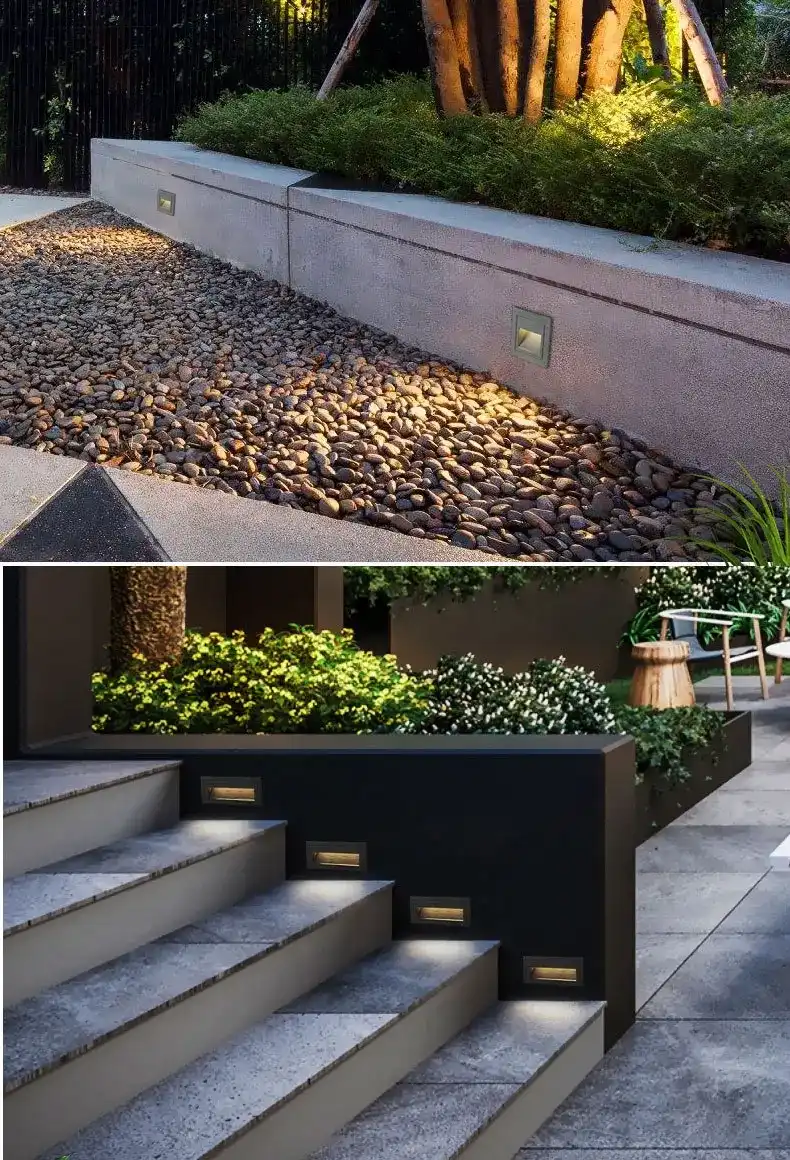
Comprehensive Guide to Outdoor Step Lights: Types and Features in 2026
To fully understand the various types of outdoor step lights that are available in 2026, it is necessary to carefully look at their technological features, installation needs, and performance traits. There are now advanced options on the market that meet the needs of specific applications while still being cost-effective and reliable.
LED Versus Solar Power Systems Analysis
Outdoor step lights that use LEDs continue to rule the market because they last a long time and use very little energy. Modern LED chips have luminous efficiency rates higher than 150 lumens per watt and keep their color temperature and brightness the same over their entire lifetime. Most high-quality LEDs now have working lifetimes of more than 50,000 hours, which means they can be used nonstop for more than five years.
Alternatives that are driven by the sun have become very popular among environmentally conscious groups and rural installation sites. These systems use modern solar panel technology that can make enough power even when it's partly cloudy outside. Smart power management keeps the lights on all night without flickering because battery management systems stop overcharging and deep discharge that could shorten the battery's life.
Wired Versus Battery-Powered Configuration Options
For high-traffic business settings, wired installations are the best choice because they send power reliably and work consistently. These systems can support brighter outputs and more advanced control features, such as the ability to lower and change the color temperature. Standard electricity infrastructure makes it easy to connect to building control systems.
Installation options for battery-powered systems are very flexible, which is very helpful for retrofitting or places where installing electricity connections would be too expensive. Modern battery technology lets devices work for longer amounts of time without needing to be charged, and wireless charging means you don't have to maintain a direct link.
Critical Performance Features and Specifications
In 2026, IP65+ waterproof ratings will be the lowest level that can be used for outdoor step lights. These rates make sure that electrical parts and optical performance are completely protected from water jets and dust that could get in. Modern closing methods use gasket materials that stay flexible at very high and very low temperatures and are reliable for a long time.
The goal of brightness optimization is to make sure there is enough light for safe travel while using as little energy and light as possible. Photometric distributions are carefully designed to send light exactly where it's needed while reducing glare that could make it hard to see or put people in danger. Color rendering index (CRI) numbers above 80 make sure that colors are seen correctly, which is especially important for security lighting and decorative lighting in buildings.
Top Outdoor Step Lighting Solutions and Comparison for 2026
In 2026, the market for outdoor step lighting includes both well-known companies and new, creative companies that offer new ways to solve old lighting problems. In order to make smart buying choices, procurement professionals need thorough comparisons that look at goods based on a number of different factors.
Leading Manufacturer Performance Analysis
Philips stays ahead of the competition in the market thanks to a wide range of products that can be used in both homes and businesses. The newest outdoor step lights from this company have advanced optical designs and Zigbee wireless connections that reduce light pollution while increasing safety lighting. Ratings for energy efficiency regularly go above and beyond industry standards, and high build quality means that the product will work reliably even in tough environments.
Ring has expanded their smart lighting options to include professional-grade outdoor step lighting systems that integrate seamlessly with current security systems. Motion recognition techniques have been improved to cut down on false activations while still being able to reliably pick up on real movement. Solar-powered options offer mounting freedom that makes them a good choice for retrofitting and remote areas.
Lutron's outdoor step lighting options are based on decades of experience controlling lights, and they come with advanced dimming and timing features. Their systems work really well in situations where exact control of light levels and interaction with architectural lighting designs are needed. Businesses that buy these items get extra value from professional fitting help and full insurance coverage.
There are now a number of new makers that make options that are less expensive and offer similar performance. These providers often offer more customization options and flexible order sizes that make them appealing for projects on a budget and for specific uses.
Comprehensive Feature and Performance Comparison
Solar-powered systems demonstrate superior total cost of ownership in applications where construction is difficult and continued energy costs are big costs, solar-powered systems have a lower total cost of ownership. On the other hand, plug-in systems work more consistently and can produce more light, which is important for high-security areas or places that need a lot of light.
Compared to human or timer-based systems, sensor-enabled operation saves a lot of energy and makes parts last longer. Modern sensors can tell the difference between various types of movement and adjust illumination levels accordingly, providing optimal lighting while minimizing energy waste.
Procurement professionals evaluating bulk purchase opportunities should consider supplier programs that offer savings for large orders, longer warranties, and technical support services. A lot of makers offer customization services that let you change the product to fit specific building needs or legal requirements.
Maintenance and Installation Best Practices in 2026
For outdoor step lighting projects to go well, both the construction steps and the upkeep steps must be carefully followed. When a system is set up correctly, it works at its best for as long as it's in use, and upkeep costs and problems are kept to a minimum.
Strategic Installation Planning and Execution
Professional installation services know how to make sure that electricity codes are followed, how to protect things, and how to place things so that they work best. Contractors with a lot of experience know what the local rules are and can make sure that works meet safety standards while also getting the best performance. However, many modern outdoor step lights feature easier installation steps that make it possible for trained facility maintenance teams to do normal installs.
Supplier-assisted installation programs are a good compromise because they mix the knowledge of the maker with lower labor costs. Usually, these programs come with thorough installation guides, technical help services, and quality assurance checks that make sure the programs are set up correctly. Remote help lets you fix problems in real time during installation, which cuts down on delays and makes sure the job is finished successfully.
Preventive Maintenance Protocols and Procedures
Cleaning on a regular basis helps keep the light output at its best and extends the life of parts. Accumulated dirt, salt layers, and organic growth can make lighting much less effective and speed up the breakdown of parts. When cleaning, the right chemicals and methods should be used to protect the optical layers and closing integrity.
Inspections of waterproof quality should be done once a year or after bad weather. When a seal breaks down, water can get in and damage electrical parts, which can be dangerous. Finding seal failures early on lets you fix them quickly, which saves you money on expensive part replacements and system failures.
Managing the lifespan of LEDs means keeping an eye on how much light they put out and replacing parts before the amounts of light drop below what is considered reasonable. Modern LED drivers have monitoring features that let you know ahead of time when a failure is about to happen. This lets you plan repair ahead of time so that there are fewer interruptions to operations.
Partnering with suppliers in a smart way lets you get technical help, replacement parts, and guarantee services that keep your system running smoothly for a long time. Comprehensive service agreements can include regular checks, preventative maintenance, and emergency repair services that make sure that important applications always work well.
Procurement Strategies and Future Outlook for Outdoor Step Lights
In 2026, strategic methods to buying will focus on analyzing the total cost of ownership, building relationships with suppliers, and making sure that technology roadmaps are aligned. Forward-thinking procurement managers know that investments in lights include more than just the original purchase price. They also have to consider ongoing costs, the need for upkeep, and changes in technology.
Bulk Purchasing and Customization Advantages
Volume buying deals save a lot of money and make sure that the quality of the product is the same at all installation places. When you place a bulk order, you can often get better guarantee coverage, faster technical support, and customization services that meet the needs of your particular application. By negotiating long-term supply deals, you can protect yourself from price changes and make sure that parts will be available for future growth projects.
Customization capabilities become particularly valuable for complex architectural applications or specialized regulatory environments. Outdoor step lights can be changed to have particular mounting arrangements, light patterns, or control systems that fit the needs of the project. Custom color values and beam patterns make it possible to integrate buildings precisely while still meeting safety standards.
Technology Integration and Future-Proofing Strategies
Modern outdoor lighting systems must have smart control features in order to work. Integration with building management systems allows for centralized control and tracking that saves energy while still meeting safety standards. Mobile application interfaces make it easy for property managers and repair workers to view data from afar.
Better standards for energy efficiency are continuing to push technology forward. For example, new LED technologies are getting better efficacy scores while also lowering the costs of making them. Strategies for buying things should plan for these changes to happen and build ties with suppliers that let them provide access to new technologies as they come out.
Environmental compliance rules are having a bigger effect on buying choices. Businesses are looking for lighting options that have the least impact on the environment over the course of their useful lives. Using solar power, recyclable materials, and using less energy all help reach sustainability goals and may qualify for environmental rewards and awards.
Working together with suppliers is a key part of long-term lighting plans that work. When compared to commodity providers who only compete on price, manufacturers who put money into research and development, offer full expert support, and keep their service networks strong offer better value.
Conclusion
As of 2026, the outdoor step lighting business has come a long way in a lot of different technology areas. This is because people want more energy efficiency, better safety, and more advanced control options. The use of smart technology, improvements in solar power, and modular design methods have turned the limits of standard lighting into competitive benefits for businesses that adapt to these changes.
When purchasing managers understand these technology trends and build smart relationships with suppliers, they can get better project results while keeping the total cost of ownership as low as possible. When you combine modern LED technology with smart control systems and full maintenance support, you get a great deal that makes it worth investing in high-quality lighting solutions.
FAQ
What makes 2026 outdoor step lighting more energy-efficient than previous generations?
In 2026, advanced LED technology gets a light output of more than 150 lumens per watt, and smart sensors cut energy use by up to 70% by precisely controlling when to turn on and off lights. Adding solar panels and smart power management reduce the amount of energy that the grid needs even more.
How do smart controls improve outdoor step lighting performance?
Smart controls let you set automatic schedules, sense motion, and keep an eye on things from afar, all of which make the time and strength of lighting better. IoT connection gives you real-time information about performance and maintenance warnings that help you avoid problems before they happen.
What waterproof ratings should I specify for commercial outdoor step lighting?
For basic weather protection in commercial settings, products must have at least an IP65 rating. For coastal or high-exposure settings, they must have an IP67 rating or higher. These requirements make sure that there is complete safety against dust and water getting in.
How do solar-powered outdoor step lights perform in limited sunlight conditions?
Modern solar systems use improved photovoltaic cells and lithium batteries for storing, so they can work reliably even when it's cloudy for a long time. Battery management systems make sure that batteries are charged as efficiently as possible and don't get damaged by overcharging or deep discharging.
What maintenance schedules optimize outdoor step lighting system lifespan?
Every year, waterproof integrity checks are done and the system is cleaned every three months to keep it running at its best. Monitoring the LED output lets you repair parts before the light levels drop below safety levels.
Transform Your Projects with USKYLED's Advanced Outdoor Step Lighting Solutions
USKYLED uses cutting-edge LED technology and a history of excellent production to make outdoor step lights that work better and last longer than the norm in the industry. Our high-CRI LED goods work without flickering and are compatible with smart controls. We can also make OEM solutions that fit your needs. Email our sales team at sales@uskyled.com to find out about our bulk prices and find out why top outdoor step light providers choose USKYLED for their most difficult projects.
References
1. International Association of Lighting Designers, "Outdoor Lighting Technology Trends and Standards for 2026," Lighting Design Quarterly, 2026.
2. LED Industry Report, "Energy Efficiency and Smart Controls in Commercial Outdoor Lighting Applications," Journal of Illumination Engineering, 2026.
3. Solar Power International, "Advanced Photovoltaic Integration in Outdoor Lighting Systems," Renewable Energy Technology Review, 2026.
4. National Electrical Contractors Association, "Installation and Maintenance Best Practices for Outdoor Step Lighting," Electrical Safety Standards Manual, 2026.
5. Building Industry Research Institute, "Smart Building Integration and IoT Connectivity in Commercial Lighting," Architecture and Technology Quarterly, 2026.
6. Environmental Protection Agency, "Energy Efficiency Standards and Environmental Compliance for Outdoor Lighting Systems," Federal Register Environmental Guidelines, 2026.

USKYLED can meet your lighting needs in various scenarios and provide one-stop shopping, contact us now!
Why You Should Choose USKYLED?
![What is Dimmable Track Lighting for Museum: Best Guide [2025]](/icms/upload/0d08cc601e7611f0b542b3ca0c0f4a83/pic/knowledgemanager-knowledgepic/e7879f32605f11f081911f363b8c1ed0/Directory/20250717 dimmable track lighting -1(1)_1752739217941.webp)